Author: eric@dubslabs.com

  • Where to Receive Faxes: 7 Best Options in 2026

    Where to Receive Faxes: 7 Best Options in 2026

    A sender asks for your fax number at 4:45 p.m. and needs documents back the same day. That is usually the moment people realize the actual question is not how to send a fax. It is where to receive one without buying equipment they will barely use.

    For receiving faxes today, the decision is usually simple. Use an online fax service if you need your own fax number, repeat use, email delivery, or a record you can search later. Use a physical location if this is a one-time task and you are fine working around store hours, shared counters, and paper pickup. If you also need print help once the fax arrives, same-day printing and faxing for businesses can support that in-person route.

    The trade-off is convenience versus permanence. An online service gives you a dedicated number and turns incoming faxes into PDFs you can read on your phone or in email. A retail location can work in a pinch, but it is less private, less flexible, and harder to reuse if the sender needs to fax you again next week.

    That is why this guide stays focused on receiving. If your actual need is just sending documents out once in a while, do not pay for an inbound fax number you will never use. In that case, a send-only workflow may fit better. If you are comparing inbox delivery options first, this guide on how to receive a fax to email covers what that setup looks like in practice.

    The options below compare both sides clearly. Dedicated online fax numbers for ongoing inbound use, and physical stores for one-off reception when speed matters more than control.

    1. eFax

    eFax (Consensus Cloud Solutions)

    eFax is the safe pick when you want a recognizable cloud fax platform and don't want to outgrow it in six months. It gives you a dedicated fax number, routes inbound faxes to email, and keeps documents in a cloud archive with audit-oriented features that matter once more than one person touches the inbox.

    That's the appeal. It works for an individual who just needs a number, but it also makes sense for teams that may later need more controls, more users, or a more formal compliance setup.

    Why eFax works well for receiving

    The main advantage with eFax is maturity. If your question is specifically where to receive faxes without juggling store hours or shared front-desk equipment, a dedicated number tied to your account is much cleaner than a one-off physical location.

    A few practical strengths stand out:

    • Dedicated number included: You're not borrowing a store line or temporary number. People can send to the same number again later.
    • Multiple ways to receive: Incoming faxes can land in email, mobile apps, and desktop workflows.
    • Better records: Searchable storage and audit trails are useful when you need to find a document after the fact.
    • Upgrade path: If your use case grows, the platform already has a business and enterprise story.

    Practical rule: If the fax contains medical, legal, HR, or financial documents, choose a service built around persistent digital records, not a printout waiting at a counter.

    eFax is less compelling for someone who receives a fax once every few months. In that case, the subscription may feel like overkill. But for repeat use, it's one of the more straightforward answers to where to receive faxes reliably.

    If your end goal is getting incoming faxes straight into your inbox, this guide on how to receive fax to email is a useful companion.

    2. FAX.PLUS

    FAX.PLUS (by Alohi)

    FAX.PLUS feels more modern in day-to-day use than some older fax brands. The web app is tidy, the team controls are clearer than many competitors, and it's easier to picture using it inside an actual business workflow instead of treating fax as a strange exception.

    It's especially appealing if you want receiving plus admin structure. Shared contacts, exports, integrations, and number porting make it practical for offices that don't want one person's inbox to be the entire fax system.

    Best fit for teams, not just solo users

    FAX.PLUS is one of the better choices when multiple people may need to see inbound faxes or when a manager wants clearer control over how documents move. It supports receiving through web, email, and mobile, and that flexibility matters when someone is waiting on a signed form and isn't at a desk.

    There's also a wider industry trend behind this kind of tool. In major markets such as North America, cloud fax adoption has been driven heavily by compliance-sensitive sectors, and large-enterprise use for inbound fax handling has already reached broad adoption according to cloud fax market reporting.

    What to watch with FAX.PLUS:

    • Good operational fit: Strong for businesses that want one service used across teams.
    • Number management: Porting and dedicated numbers help if you already have a published fax number.
    • Enterprise compliance line: HIPAA with a BAA sits higher up the ladder, so regulated buyers need to check the right tier.
    • Long documents: Lower plans can be less forgiving for very large fax jobs.

    Clean admin controls matter more than flashy branding. Most fax problems aren't transmission problems. They're routing and access problems.

    For a broader side-by-side view of digital fax platforms, this online fax service comparison is worth scanning before you commit.

    3. MyFax

    MyFax (Consensus Cloud Solutions)

    MyFax is easier to recommend to an individual or a very small office than to a compliance-heavy department. It does the basics well. You get a local or toll-free number, inbound faxes can arrive via email and web access, and the setup is usually less intimidating than some enterprise-leaning services.

    That simplicity is the point. If someone says, “I just need a fax number so a clinic or title company can send me something,” MyFax is closer to that level of complexity.

    A practical small-business option

    MyFax works well when receiving faxes is part of your life, but not a major system inside your business. Multiple sender emails on one account also make it easier for a small team to share access without rolling out something more formal.

    Its trade-off is feature depth. You don't choose MyFax because you want the most advanced admin controls or the deepest compliance toolkit. You choose it because onboarding is simple and the workflow is familiar.

    A sensible use case looks like this:

    • Occasional inbound documents: Insurance forms, signed agreements, school paperwork, vendor forms.
    • Shared access for a small team: A few people can monitor the same account.
    • Mobile convenience: Useful when you're waiting on a document while away from the office.
    • Less ideal for regulated complexity: If document handling rules are strict, a more specialized platform may fit better.

    If you're trying to sort through consumer-friendly and business-friendly services without getting lost, this overview of online faxing services gives good context.

    4. SRFax

    SRFax is the option I'd shortlist when receiving faxes is part of a controlled process, not just a convenience. A clinic waiting on records, a law office receiving signed filings, or an operations team routing multi-page documents to a shared inbox usually cares less about flashy design and more about reliable intake, searchable records, and clear handling rules.

    SRFax is built for that kind of work. The service centers the receiving side around email delivery and portal access, which matters if your team already works out of shared mailboxes instead of asking staff to learn another app.

    Where SRFax stands out

    SRFax offers dedicated fax numbers, number porting, inbound PDF delivery, and web access. It also has HIPAA- and PHIPA-focused plans for U.S. and Canadian organizations, so it fits environments where incoming documents may contain protected or highly sensitive information.

    As noted earlier, fax still has a stubborn place in healthcare and other document-heavy fields. In those settings, the practical question is not whether fax feels modern. It's whether inbound records arrive consistently and can be reviewed, stored, and retrieved without confusion.

    That is where SRFax earns its place on this list.

    Best for controlled receiving workflows

    SRFax makes the most sense for teams that want structure.

    • Email-first inbound handling: Faxes arrive as PDFs in the workflow your staff already checks every day.
    • Compliance-oriented options: Useful for healthcare, legal, and other regulated use cases in the U.S. and Canada.
    • Good fit for heavier inbound traffic: Better suited to records, forms, and multi-page documents than one-off personal use.
    • Less polished on mobile: There's no native mobile app, so the experience is more functional than app-centric.

    The trade-off is straightforward. SRFax is easier to justify when receiving faxes is an ongoing business process. If you only need a fax number for a single document this month, it can feel like more system than you need. In that case, an occasional-use service or even a physical location may be the smarter choice.

    If your main requirement is dependable inbound handling for sensitive documents, SRFax is one of the stronger picks in this group. If you realize you do not need to receive faxes at all, and only need to send one occasionally, a send-only workflow will usually be simpler and cheaper.

    5. iFax

    iFax

    iFax is one of the most device-friendly options in this group. If you move between phone, tablet, desktop, and laptop, it's convenient to have native apps across major platforms instead of forcing everything through a browser.

    That makes iFax easy to like for professionals who are rarely in one place. Think agents, field staff, clinicians on the move, or anyone receiving time-sensitive documents while traveling.

    Strong cross-platform choice

    iFax supports local and toll-free numbers, porting, fax-to-email, OCR, annotations, e-sign tools, and higher-tier HIPAA-oriented options. It's not the leanest product, but some people want an all-in-one document workflow instead of a barebones fax inbox.

    The broader environment favors tools like this. Dedicated inbound fax-to-email bridges remain a preferred setup for many healthcare providers in North America and Europe, according to online fax market reporting on inbound preferences.

    What I'd weigh before choosing iFax:

    • Best if you use multiple devices: The native apps are a real advantage.
    • Good if fax and document handling overlap: OCR and annotations reduce app-switching.
    • Not ideal for one-time use: If you need one incoming fax this month and nothing else, it may be more service than you need.
    • Check the plan carefully: Full receiving capability starts higher than the entry level.

    For people asking where to receive faxes when they're never at a fixed desk, iFax is one of the more natural fits.

    6. FAXAGE

    FAXAGE fits a specific kind of receiver. You need a real fax number, you expect incoming volume to rise and fall, and you care more about control and pricing than polished design.

    That makes it a practical option for small offices, back-office teams, and technical buyers who want inbound faxing to work in the background.

    A practical pick for variable inbound volume

    FAXAGE offers local and toll-free numbers, number porting, inbound fax-to-email, web access, API support, and delivery to multiple email addresses on one account. For receiving faxes, that combination matters more than branding. A shared office can route documents to the right people, and a technical team can tie inbound fax traffic into existing workflows without adding another document platform.

    The trade-off is straightforward. FAXAGE often makes more sense for buyers who are comfortable choosing a plan based on actual usage patterns. If your incoming fax volume is uneven, metered pricing can be cheaper than paying every month for a larger bundled plan you rarely use. If you want a predictable flat bill and a friendlier consumer app, other services in this list may be easier to live with.

    I usually put FAXAGE on the shortlist for teams that receive faxes as part of an operating process, not as an occasional convenience.

    Here is the practical filter:

    • Choose it if: You want a dedicated inbound number, flexible routing, and pricing that can fit inconsistent receiving volume.
    • Skip it if: You want the simplest setup experience or a more polished mobile-first interface.
    • Consider it if your workflow is technical: API access is useful for automation, but plenty of solo users will never touch it.

    For readers focused only on where to receive faxes, FAXAGE is one of the clearer online-service alternatives to a physical pickup location. It gives you an always-available inbox instead of tying receipt to store hours or a front desk. If you are using SendItFax and realizing you do not need inbound reception at all, that is a different decision. In that case, a send-only workflow may be the better fit, and paying for a permanent receive line may be unnecessary.

    7. FedEx Office and The UPS Store

    A common receiving problem looks like this. A clinic, school, law office, or government desk says, "We can fax it to you now," and you do not have a fax number that can accept inbound pages. If that is a one-time situation, FedEx Office or The UPS Store faxing service can be a practical stopgap.

    Some locations will receive a fax at the store, print it, and hold it for pickup. That can work well if you are traveling, between offices, helping a relative with paperwork, or handling a document that does not justify opening a monthly account.

    The trade-off is control. A retail store helps you get a fax once. It does not give you an inbox, searchable records, routing rules, or reliable after-hours access. For a guide focused only on where to receive faxes, that distinction matters. A store is temporary. An online fax service is a receiving system.

    When a physical location still makes sense

    Use a store if the need is immediate, infrequent, and low sensitivity. In practice, that usually means a one-off form, a copy of a record you need the same day, or a situation where account setup would take longer than the transaction itself.

    Call the location first. Store policies vary, staff availability varies, and not every branch handles inbound faxes the same way. Confirm the fax number, whether they will hold the document, what identification they require, and what the pickup fee will be.

    Here is the practical filter:

    • Choose a store if: You need to receive a fax today, do not expect another one soon, and prefer walk-in help over setting up an account.
    • Skip it if: The fax contains medical, legal, financial, or HR information that should not sit at a counter or in a shared print area.
    • Skip it if: You may need repeat access, digital storage, or pickup outside business hours.
    • Use an online service instead if: Receiving faxes is part of an ongoing workflow rather than a one-time errand.

    A shipping store can receive a fax. It cannot replace a proper inbound document process.

    There is also a useful decision point for SendItFax users. If you came here looking for a place to receive faxes but realize your actual need is only outbound, do not pay for an inbound number you will barely use. Keep SendItFax for send-only work, and use a physical location for the rare incoming fax. If inbound documents will keep coming, move to one of the online services above and give yourself a permanent receiving channel.

    Top 7 Fax Reception Options

    Service 🔄 Implementation complexity Resource requirements ⭐ Expected outcomes 📊 Ideal use cases 💡 Key advantages
    eFax (Consensus Cloud Solutions) 🔄 Moderate, account setup, apps, enterprise options Paid tiers with tiered page allowances; BAAs on Business/Enterprise ⭐ High reliability and compliance (HIPAA-ready on Business+) 📊 Regulated industries and teams scaling from individual to enterprise 💡 Mature feature set, searchable storage, audit trails, API/HITRUST options
    FAX.PLUS (by Alohi) 🔄 Low–Moderate, web/email/mobile setup with admin console Competitive paid plans (200–500 pages); Enterprise for BAA ⭐ Solid value and scalability with enterprise API 📊 SMBs and teams needing admin tools and integrations 💡 Competitive entry pricing, clear upgrade ladder, integrations
    MyFax (Consensus Cloud Solutions) 🔄 Low, simple onboarding via web/email/mobile Bundled page allowances; watch overage fees ($0.10/page) ⭐ Convenient and reliable for light–moderate use 📊 Individuals and small teams with occasional faxing 💡 Easy setup, clear bundles, mobile support
    SRFax 🔄 Low–Moderate, email-first workflows; web portal for large docs HIPAA/PHIPA plans with BAAs; minimal app dependency ⭐ Strong compliance and large-document handling 📊 Healthcare, legal and other regulated users needing secure inbound 💡 Privacy-focused, high limits, reliable email workflows
    iFax 🔄 Moderate, multi-platform apps, OCR, e-sign, API Flexible subscriptions or one-time; higher tiers for full receive and BAA ⭐ Feature-rich with broad device coverage for teams 📊 Teams needing cross-device support and healthcare-ready features 💡 OCR, annotations/e-sign, “no overage” tiers, wide platform support
    FAXAGE 🔄 Low, metered (per-minute) billing and API access Pay-as-you-go; very low entry cost; developer-friendly ⭐ Cost-efficient for variable or light usage 📊 Budget-sensitive users and developers with unpredictable volume 💡 Transparent metered billing, generous included minutes on mid-tiers
    FedEx Office & The UPS Store (in-person) 🔄 Minimal, walk-in receive service, no setup Pay-per-use for printing/scanning; staff assistance available ⭐ Immediate one-off access without account setup 📊 Travelers or users needing occasional in-person receipt/printing 💡 No account required, staff help & printing onsite; not ideal for sensitive content

    Your Next Step Choosing a Service & Sending Faxes

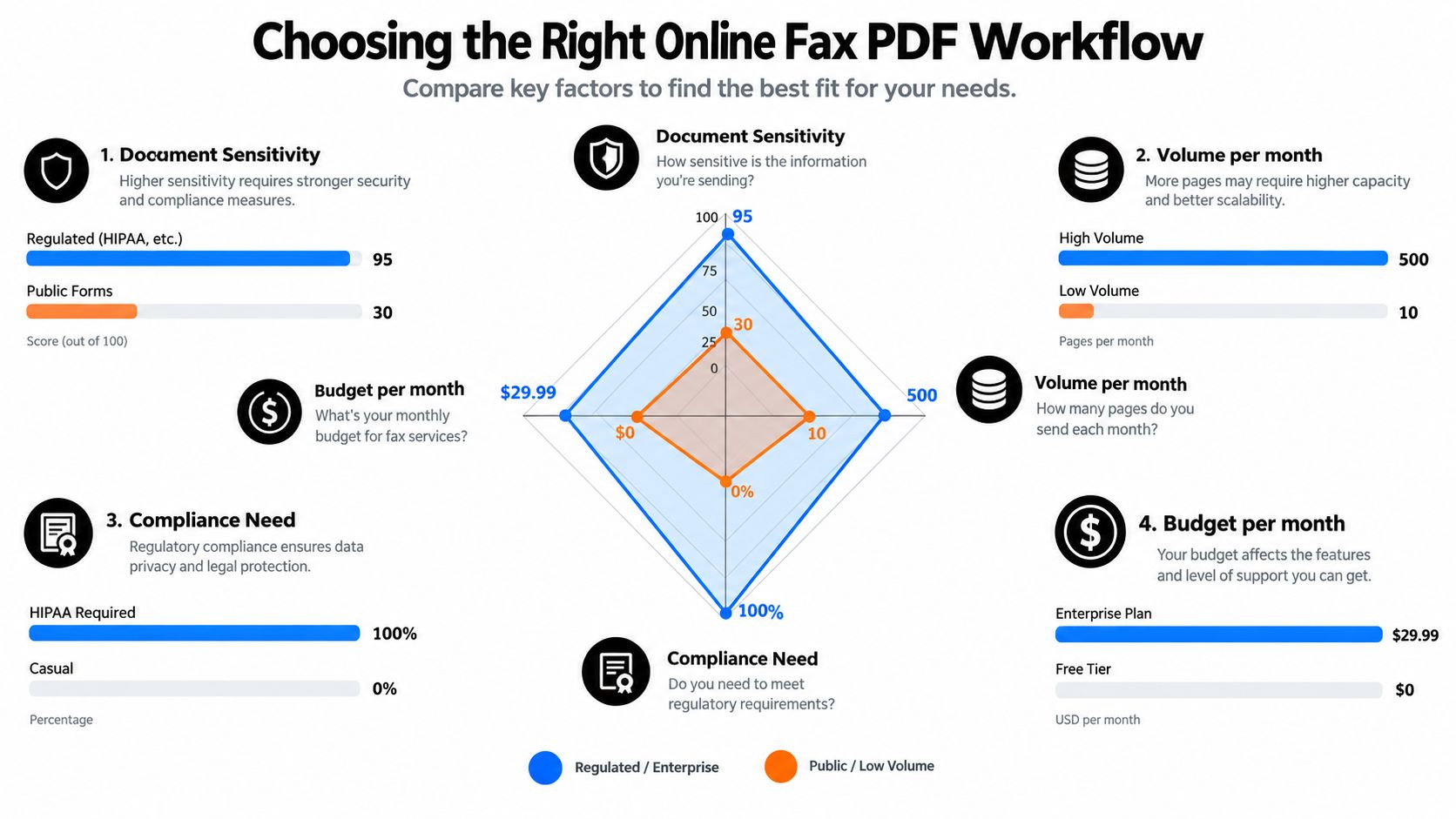
    Choosing where to receive faxes comes down to three things: privacy, frequency, and how much setup you can tolerate. If you expect recurring documents, want a stable fax number, or need a record you can search later, an online service is the stronger choice. For that kind of use, SRFax and eFax stand out because they're built for ongoing inbound handling, not just a temporary workaround.

    If your needs are lighter, MyFax and iFax are easier to picture for individuals and small teams. MyFax keeps things simple. iFax is better if you live across several devices and want document features around the fax itself. FAX.PLUS makes the most sense when receiving faxes is part of a broader team workflow. FAXAGE is the practical pick when you care about efficient billing and infrastructure more than presentation.

    FedEx Office and The UPS Store still have a place. For a one-time, non-sensitive fax, walk-in receiving can be the fastest fix. You don't need an account, and staff can help. The trade-off is privacy and repeatability. A store counter isn't where you want long-term inbound records living.

    There's also a separate question that trips people up. Sometimes you don't need to receive faxes at all. You just need to send one to a doctor's office, law firm, school, lender, or agency that still expects fax. In that case, a receiving subscription is the wrong tool.

    That's where SendItFax fits. It's built for outbound faxing from a browser without creating an account, which makes it a useful counterpart to the receiving options above. If someone else already has a fax number and you just need to deliver documents quickly to a U.S. or Canadian line, it's a cleaner match than signing up for a monthly inbound service you won't use. If you also manage document-heavy legal workflows, CasePulse's top document management solutions can help on the storage and organization side.

    A simple rule works well. Subscribe for receiving only when you expect ongoing inbound traffic. Otherwise, keep receiving and sending as separate decisions and choose the lightest tool that solves the actual problem.


    If you only need to send a fax, SendItFax is the straightforward option. You can upload a DOC, DOCX, or PDF from any browser and send to U.S. and Canadian fax numbers without creating an account. The free option covers small sends, and the $1.99 Almost Free plan supports up to 25 pages, removes branding, and gives priority delivery. For occasional, urgent, or one-way faxing, that's usually the better fit than paying for a full receive service you won't use.

  • Fax to Server Setup: A Practical Guide for 2026

    Fax to Server Setup: A Practical Guide for 2026

    Your current setup probably looks familiar. A shared fax number feeds a dusty machine in one office, somebody checks the tray when they remember, and important documents turn into PDFs only after a person scans them back into a computer. Remote staff can’t see inbound faxes without asking someone onsite for help. Nobody trusts the routing. Everyone assumes the fax arrived, until it didn’t.

    That’s the point where “fax to server” stops being a legacy cleanup project and becomes an operations project. The fax machine is only the visible problem. The underlying issue is that inbound documents still depend on paper, manual sorting, and guesswork. A fax server fixes that only if you choose the right architecture first, then build the routing and security around it.

    The First Critical Choice Cloud Service Or On-Premise Server

    A lot of teams start this project thinking they’re choosing a product. They’re not. They’re choosing an operating model.

    Interest in fax server projects is rising. Search queries for “fax server setup” have risen 40% in the last year, driven by fax machine shortages and remote work needs, according to WestFax’s overview of HIPAA faxing. The problem is that most advice still jumps from “replace the machine” straight to “buy cloud fax,” without dealing with routing, ownership, or integration.

    What usually pushes the change

    The trigger is rarely elegant. It’s usually one of these:

    • The office machine keeps failing: pages jam, toner runs out, or the line quality drifts just enough to make delivery unreliable.
    • Remote staff need access: inbound documents can’t stay trapped in one building.
    • Audit pressure increases: leadership wants a record of who received what, when, and where it went.
    • Someone needs automated routing: accounting, intake, HR, and records each want faxes delivered differently.

    If you’re still relying on standalone hardware, it helps to look at the broader replacement question too. This comparison of fax machines for business is useful for understanding what you’re really giving up when you move away from physical devices.

    Cloud Fax Service vs. On-Premise Fax Server at a Glance

    Factor Cloud Fax Service On-Premise Fax Server
    Setup speed Faster to launch. Good for teams that need to get off paper quickly. Slower. Requires server planning, telephony coordination, testing, and internal support.
    IT overhead Lower day-to-day maintenance. Vendor handles most platform upkeep. Higher. Your team owns patching, uptime, backups, and troubleshooting.
    Control Less direct control over platform internals and upgrade timing. Full control over routing logic, storage, retention, and infrastructure design.
    Compliance model Easier path if the provider supports regulated workflows and contracts. Strong fit when policy requires tighter internal ownership of systems and data paths.
    Integration flexibility Usually best for email, folder drops, and API/webhook workflows. Best when you need deep internal integration with line-of-business systems and custom routing.
    Scalability Easier to expand without adding local hardware. Scales well, but only if you size hardware, licensing, and telephony correctly.
    Failure domains Depends on vendor platform plus your internet path. Depends on your server, your network, and your telephony design.
    Best fit Small teams, distributed offices, lean IT shops, fast migrations. Organizations that need maximum control and already have capable infrastructure staff.

    Practical rule: If your team struggles to maintain ordinary file servers cleanly, it probably shouldn’t run its own fax platform either.

    How I separate the right choice from the wrong one

    Cloud wins when the business problem is speed, accessibility, and low friction. It’s the right answer for firms that want inbound fax to land in shared mailboxes, folders, or applications without adding telecom complexity.

    On-premise wins when the business problem is control. If your security team cares about exact routing paths, local retention, internal segmentation, and tight integration with existing systems, building your own fax to server environment can make sense. But it only works if someone owns it. Half-managed fax servers become the most fragile system in the stack.

    The mistake I see most often is buying cloud because it sounds simple, then discovering later that nobody planned document routing, user permissions, archive rules, or downstream processing. The second most common mistake is building on-prem because leadership wants control, then assigning it to a team that doesn’t have the time to support telephony and server maintenance.

    Configuring Your Cloud Fax To Server Pipeline

    Once you’ve chosen cloud, the critical work starts after the number is provisioned. “Fax to email” is fine for a solo operator. It’s weak for a team. What you want is a pipeline that takes inbound faxes from the provider and drops them where work is performed.

    A hand gesturing towards a digital network graphic overlaid on server racks in a data center.

    A good cloud deployment has three layers. Receipt, validation, and delivery. If you skip the middle layer, users end up trusting every file that arrives just because it has a fax header.

    For a broader look at hosted options, this breakdown of cloud-based fax solutions is worth reviewing before you lock in your provider.

    Start with delivery targets, not inboxes

    Most cloud fax platforms let you forward inbound documents to an email address. That’s the easiest option, but it becomes messy fast. Shared inboxes fill with duplicate attachments, users download copies to desktops, and version control disappears.

    Better targets are:

    • A controlled cloud folder: good for shared access and light process discipline.
    • A document management repository: better when records retention matters.
    • A webhook or API endpoint: best when another application needs to react automatically.
    • A hybrid approach: PDF to archive, metadata to an app, alert to a monitored mailbox.

    If the provider supports folder delivery, create separate destinations by business function. Don’t dump every fax into one giant intake directory and hope naming conventions will save you.

    A practical setup order

    Here’s the order that avoids rework:

    1. Assign the inbound number to a single business workflow first. One number, one owner, one route.
    2. Define the canonical storage location. Pick the system of record before creating user notifications.
    3. Set file naming rules. Include date, time, fax number, and destination label if your provider allows it.
    4. Enable delivery confirmations. Users need a clear way to know whether the provider accepted and delivered the fax.
    5. Add exception routing. Failed processing should go to a queue that a person reviews.
    6. Only then add email alerts. Alerts should point users to the stored file, not become the storage system.

    The cleanest cloud fax setups treat email as notification, not as the archive.

    Webhook delivery is where cloud gets useful

    When a cloud service can push an event to your application, inbound fax becomes much more than a PDF attachment. Your app can create a case, attach the file, assign a team, or start OCR and indexing without human handling.

    A typical inbound payload often includes fields like these:

    • Fax identifier
    • Receiving number
    • Sending number
    • Received timestamp
    • Page count
    • File format
    • Storage URL or attachment reference
    • Transmission status

    In practice, I recommend treating webhook payloads as untrusted until your app verifies the sender signature or token, validates expected numbers, and confirms the file was successfully stored. If the webhook says a fax arrived but your storage step fails, users will assume the job is done when it isn’t.

    Common cloud gotchas

    Cloud projects usually break in predictable ways:

    • Too many recipients: one inbound fax triggers multiple mailboxes, and nobody owns final processing.
    • No queue for failures: malformed PDFs, duplicate deliveries, or bad OCR jobs vanish unnoticed.
    • Permissions drift: everyone can see everything because the folder was created for convenience.
    • Unclear retention: users keep local copies because they don’t trust the central archive.

    The cloud model works best when the service handles receipt, but your rules decide where each fax belongs next.

    Implementing An On-Premise Fax Server

    A lot of on-prem fax projects start the same way. The server is installed, a few test faxes go through, everyone assumes the hard part is done, and then production traffic exposes the underlying problem. Routing is unclear, the SIP provider handles voice better than fax, and nobody agreed on where failed jobs should go.

    On-premise fax to server still makes sense when you need direct control over retention, integrations, and data handling. I usually recommend it for organizations with strict compliance requirements, site-to-site dependencies, or line-of-business systems that were built around local workflows. The trade-off is simple. You get control, but you also inherit the telecom and support burden that cloud services hide.

    A six-step infographic illustrating the implementation journey for setting up an on-premise fax server in a business.

    Pick software that matches the support model

    For a small office with light volume, Windows Fax and Scan may be enough. It can handle basic receive and send tasks if expectations are low and the workflow is simple. It is a poor fit for shared intake, departmental routing, audit needs, or any environment where fax delivery has operational consequences.

    For larger deployments, teams usually evaluate HylaFAX or platforms built around Asterisk. Those options offer far more control over dial plans, inbound routing, device behavior, and integration points. They also assume your team can read logs, trace failures across the phone system, and maintain the platform after the installer leaves.

    That support question matters more than feature checklists. The better product on paper becomes the worse choice if your staff cannot diagnose a failed inbound route at 4:30 p.m. on a Friday.

    Telephony decisions matter more than the server brand

    Fax reliability on IP networks depends heavily on the path between your carrier, gateway, and server. If your environment supports T.38 cleanly end to end, use it. It is usually the safer choice for fax traffic than generic voice pass-through, especially once you add jitter, transcoding, or carrier-side changes.

    This is also where many deployments fail. Voice can sound fine while fax sessions drop, stall, or produce incomplete pages. I have seen teams replace software twice before discovering the underlying issue was a provider normalizing traffic for voice and treating fax as an afterthought.

    A clean on-prem build starts with a simple question. Who owns the fax path when transmissions fail: telecom, infrastructure, or the application team? If the answer is unclear, support will be slow and users will blame the server.

    Build the system around routing and review

    The server should be sized for the workflow, not just for raw fax volume. Concurrent inbound jobs, OCR load, image processing, storage growth, and retry behavior all affect the design. If the server is only specified as “a VM for fax,” expect trouble later.

    A practical deployment sequence looks like this:

    • Confirm carrier and gateway behavior first: test T.38 support, fallback behavior, and fax handling under load before finalizing the server design.
    • Define DID ownership early: every inbound number needs a business owner, a target queue, and a rule for exceptions.
    • Separate receipt from long-term storage: let the fax server receive and log the job, then hand archived copies to the repository that owns retention.
    • Create a review state for bad or ambiguous faxes: unreadable pages, partial transmissions, and unknown destinations need a human queue.
    • Document failure handling: busy signals, retransmissions, duplicate receipts, and line errors should trigger a known response, not improvisation.

    That last point gets missed often. A fax server that can receive documents is only half built. The useful system is the one that routes cleanly, flags exceptions, and gives staff a predictable way to resolve edge cases.

    What works in production

    These choices usually hold up well:

    • Dedicated fax settings on the gateway instead of reusing generic voice profiles
    • Conservative defaults for speed and page handling when reliability matters more than throughput
    • A pilot rollout with one or two departments before wider cutover
    • Daily log review during the first weeks of production
    • Clear ownership between telecom, server, and application teams

    What causes repeated trouble

    These choices usually create avoidable support tickets:

    • Consumer-grade VoIP adapters in business fax workflows
    • Assuming voice quality and fax reliability are the same thing
    • Routing every inbound fax straight into a live business system with no review queue
    • Letting each team manage only its own piece without one owner for the full delivery path
    • Treating fax retention and audit requirements as an afterthought

    A stable on-prem fax server depends on three things working together: telephony, routing logic, and support ownership.

    Reliability checks that catch real problems

    When fax performance is inconsistent, start with the path before blaming the application. Check for packet loss, jitter, codec changes, SIP re-invites, gateway firmware quirks, and carrier behavior during longer jobs. Multi-page transmissions often expose problems that short test faxes never reveal.

    I also recommend testing with real documents, not just a one-page sample. Use mixed page counts, imperfect source quality, and the actual destination rules the business will use. That approach surfaces the issues that matter in production, especially if the broader goal is not just receiving a PDF but feeding OCR, routing, and downstream systems without manual cleanup.

    Administrators who plan for that full chain usually get better results. The fax server is only the intake point. The business value comes from what happens after receipt, and the on-prem design should support that from day one.

    Automating The Inbound Fax Workflow

    Teams often stop too early. They celebrate when the fax arrives as a PDF in a folder. That’s not transformation. That’s just a paperless inbox.

    Abstract 3D digital illustration showing floating capsules and colorful paper pages with the text Automate Workflow.

    Value appears when inbound fax stops being a document delivery event and becomes the first trigger in a workflow. That usually means some combination of OCR, rules-based routing, document tagging, and archiving into the system your staff already uses.

    OCR turns images into usable records

    Fax files arrive as images more often than teams realize. If nobody runs OCR on them, your archive becomes a pile of visually readable files that are operationally blind. Staff can open them, but they can’t search them well, classify them reliably, or extract metadata without manual work.

    A practical OCR flow looks like this:

    • Capture the fax file immediately: don’t let users rename it first.
    • Run OCR in a staging area: keep the raw file and the processed file linked.
    • Extract a small metadata set: sender number, received date, page count, and key text fields if available.
    • Store both image and text context: the image remains the record, the text makes it usable.

    Good OCR won’t fix a terrible fax image, but it will make decent inbound documents searchable and routable. That’s enough to cut a lot of manual triage.

    Routing rules should reflect business ownership

    The best routing logic starts with things the system can detect consistently. DID number, destination line, sender number, cover page text, or document keywords after OCR. The worst routing logic depends on users remembering to classify files after receipt.

    A simple pattern looks like this:

    Trigger Action
    Inbound number assigned to finance Save to finance intake folder and notify the monitored team mailbox
    OCR detects patient record language Route to a restricted repository with limited staff access
    Known sender matches a partner organization Tag the fax for priority review
    No rule matches Send to an exception queue for manual classification

    Build routing around what the system can verify, not what users promise they’ll remember later.

    File naming and archiving need discipline

    If every inbound fax gets a human-edited filename, your archive will decay almost immediately. Standardize names before users ever touch the file. Date, intake route, sending number, and an internal identifier are usually enough.

    For storage, push documents to the platform people already trust. That might be SharePoint, a document management system, or a controlled network repository. The important part is consistency. Don’t let the fax server become a second shadow archive with its own informal rules.

    A short demonstration can help when you’re planning workflow automation and document handling:

    Where automation usually fails

    It usually isn’t the OCR engine. It’s governance.

    • Nobody owns the rules: departments ask for exceptions until the routing logic becomes unmaintainable.
    • The exception queue is ignored: unmatched faxes pile up and users lose trust.
    • Archive permissions are too broad: automation succeeds technically but fails operationally.
    • There’s no retention policy: old intake folders become unofficial record systems.

    When fax to server projects succeed long term, the document arrives once, gets classified once, and lands in the right system without staff inventing process in their inbox.

    Ensuring Security and HIPAA Compliance

    Monday at 8:15 a.m., a referral fax lands in the right inbox, gets copied to the wrong shared folder, and sits there for six months with open permissions. That is how many fax compliance failures happen. Not through exotic attacks, but through ordinary workflow decisions made during setup.

    In healthcare, that risk is easy to underestimate because fax still carries a huge share of clinical communication. Get Codes Health’s review of medical fax usage statistics reports that 70% of communication still happens via fax, rising to 90% when integrated EHR fax workflows are counted, with more than 9 billion fax pages exchanged annually in the United States. The same source reports 117 network server fax breaches by 2019, frequent delays tied to patient harm, reordered tests caused by lost faxes, and a $2.5 million HIPAA fine tied to fax mishandling.

    A server rack with glowing network status lights, featuring a shield icon and the text Secure Compliance.

    A fax to server deployment becomes safer only when the full document path is controlled. That includes intake, temporary storage, OCR staging, final archive, notifications, backups, and admin access. Teams often secure the fax application itself and forget the folders, mailboxes, and service accounts around it. That is the gap auditors find.

    Start with five controls:

    • Encryption in transit: protect fax data between gateways, applications, storage, and user access points.
    • Encryption at rest: secure stored files in queues, archives, snapshots, and backups.
    • Role-based access: intake staff, clinicians, HIM staff, and system admins should have different permissions.
    • Audit logging: record receipt, routing, viewing, export, deletion, and admin changes.
    • Retention and disposal: remove old files from temp paths, email notifications, and unmanaged exports.

    For healthcare, vendor screening has to go beyond feature checklists. If a provider cannot support a Business Associate Agreement, document its controls clearly, and explain where temporary files live, it should not make the shortlist. This guide to choosing a HIPAA-compliant fax service is a practical reference for that review.

    Cloud deployments add another layer of due diligence. The fax app may be configured correctly while the storage account, logging stack, or identity settings are not. If you are assessing hosted infrastructure around this workflow, review CloudCops on cloud platform security as well. The platform controls underneath the fax workflow matter just as much as the fax settings.

    The trade-off is straightforward. Tighter controls reduce exposure, but they also add friction for support teams and end users. Broad shared access makes intake faster for a week, then turns every permission review into a cleanup project. Aggressive retention keeps storage tidy, but if legal hold and records teams are not involved, staff will start saving local copies and create a different problem.

    The best fax server deployments treat security as part of document workflow design, not as a separate compliance task. If inbound faxes trigger OCR, routing, and archival rules, those automation steps need the same scrutiny as the fax transport itself. That is where the core business value shows up, and it is also where many avoidable HIPAA problems start.

    Testing Troubleshooting And Sending Faxes

    A fax server usually looks fine right up until the first real document misses its route, OCR fails unnoticed, or a five-page referral arrives as three unreadable pages. That is why I treat testing as a workflow exercise, not a basic send-and-receive check. The transport can succeed while the business process still fails.

    Start with a controlled set of test documents that match real use. Send a clean one-page file, then a multi-page document, then something harder to process, like a skewed scan or a form with handwriting. Check where the fax lands, how it is named, whether OCR extracts usable text, and whether routing rules send it to the right queue or folder. Email notifications are helpful, but they are not proof that the archive, indexing, and downstream automation worked.

    A pre-flight checklist that catches most problems

    • Run an inbound test first: confirm the document lands in the correct destination and creates a usable log entry.
    • Send a multi-page fax: longer jobs expose timeout, buffering, and image-quality problems that a one-page test can miss.
    • Review transaction logs after each test: the receiving application can show a file while the fax layer still reports retries or page errors.
    • Test routing by DID and by document content: number-based routing and OCR-based routing fail for different reasons.
    • Force an exception on purpose: break a rule and confirm the fax goes to a monitored fallback location instead of disappearing into a dead queue.

    Transport quality still matters, especially on FoIP. As noted earlier, IP faxing is more sensitive to jitter, packet loss, codec choices, and carrier interoperability than a stable analog path. ECM and T.38 help. They do not fix a weak WAN circuit, a misconfigured SIP trunk, or a provider that unannounced falls back to G.711 at the wrong moment.

    How to read failures without guessing

    The error pattern usually points to the failing layer if you know what to look for.

    • Handshake failures usually mean protocol negotiation, line compatibility, or carrier interop trouble.
    • Partial pages, stretched images, or corruption usually point to transport instability.
    • Failures on longer jobs often come from timeout settings, memory limits, or buffering issues in the fax service or gateway.
    • Misrouted inbound faxes are usually rule logic, OCR confidence, or mapping errors inside the application stack.

    Check delivery confirmations, transaction logs, and device logs in that order. That narrows the problem fast.

    For sending, keep the scope honest. If the project’s real value is inbound capture, OCR, routing, and records handling, bolting full outbound fax operations onto the same platform can add support work without much payoff. Teams that send only occasional documents often do better with a separate browser-based tool for one-off jobs, overflow, and remote users.

    If you only need to send occasional outbound faxes to U.S. or Canadian numbers, SendItFax is a straightforward option. You can send from a browser without a fax machine or account, which makes it useful for overflow, one-off documents, remote staff, or teams that want to keep their fax to server setup focused on inbound intake and workflow automation.

  • Public Fax Machine Use: 2026 Guide

    Public Fax Machine Use: 2026 Guide

    You sign the form, scan the page with your eyes one more time, and then hit the same wall a lot of people still hit. The office, clinic, lawyer, county agency, or title company says they need it by fax.

    That request feels absurd until it lands on your desk with a deadline attached.

    I’ve dealt with enough fax traffic to know the pattern. The urgent document is ready, the recipient is waiting, and suddenly your problem isn’t the paperwork. It’s figuring out where to send it, whether the machine will work, whether anyone else can see it, and whether the confirmation page means what you think it means. Public fax machine use still exists for a reason, but the old walk-in routine has a lot more friction and risk than anticipated.

    Why You Still Might Need to Send a Fax in 2026

    A lot of people only think about faxing when they’re forced into it. It’s usually a medical release, a signed contract, a school form, a legal filing, or a records request that has to move today. Email would be easier, but the recipient’s process hasn’t changed, so you’re stuck working inside theirs.

    That isn’t just bad luck. Faxing still has a real foothold in regulated work. A 2024 Statista-based fax market analysis says approximately 17% of businesses globally still rely on faxing for critical operations, and it projects the fax services market will grow from $3.3 billion in 2024 to $4.47 billion by 2030. That tells you something important. Faxing isn’t gone. It’s concentrated in places where compliance, document handling, and traceable workflows still matter.

    Healthcare is the classic example. Legal offices and government counters aren’t far behind. In those environments, people often care less about whether a tool feels modern and more about whether it matches an established procedure.

    The one-off sender meets a legacy system

    Most readers aren’t running a fax room. They’re dealing with a one-time need inside a legacy system.

    A parent needs to send immunization paperwork to a clinic. A freelancer sends a signed W-9 to a client whose back office still routes incoming documents by fax. A caregiver sends a release form because the records department won’t accept an email attachment. Those aren’t edge cases. They’re routine moments where old infrastructure still controls the next step.

    If you’re trying to make sense of why fax still shows up in these situations, this breakdown of what faxes are used for helps explain why so many industries never fully let go of it.

    Public fax machine use survives because the sender and the recipient rarely modernize at the same speed.

    Why the old solution feels worse than the problem

    The frustrating part isn’t just that fax exists. It’s that the common solution is still “go find a machine somewhere.”

    That usually means leaving your home or office, printing extra pages, standing near a shared multifunction machine, feeding papers through, then hoping the line connects. If you only fax once or twice a year, every step feels awkward because it is awkward. Physical faxing was built for staffed offices, not for people trying to solve a document problem between meetings.

    Where to Find a Public Fax Machine and What to Expect

    The most common public fax machine locations are still business service counters, copy centers, libraries, co-working spaces, and private mail shops. That tracks with broader fax usage pattern assessments, which indicate roughly one-third of organizations continue to maintain traditional paper fax machines, often in public-facing business centers and libraries, alongside digital fax options.

    A young woman sitting at an office desk with a printer, prepared for public fax machine use.

    If you’re starting from scratch, the fastest way is to search nearby business centers first. This guide on where you can send a fax near you is a good shortcut before you start driving around.

    The places that usually work

    UPS Store and FedEx Office are often the most predictable options. Staff usually know the process, and the machines are used regularly enough that you’re less likely to find one sitting idle and half-broken.

    Libraries can be a good fit if you want a quieter setting. The catch is that availability varies by branch, and some libraries route faxing through staff rather than self-service.

    Office supply and print centers are another solid fallback. These locations often use multifunction devices that scan, copy, print, and fax from one touchscreen panel.

    Private mailbox and shipping shops are worth checking too. If you’re in Texas, for example, this page on convenient office services in Sugar Land shows the kind of local business center that often handles faxing, scanning, and related document tasks in one stop.

    What the machine is usually like

    Don’t expect a standalone fax machine from the 1990s. Most public setups today are multifunction printer-copier-scanner units. They often sit near a service counter or in a self-service print area.

    That matters because the workflow changes a little:

    • You may scan first, then send. Some machines digitize the pages before transmission.
    • The paper path may be touchy. Thin receipts, curled pages, or stapled packets can jam or skew.
    • The settings may not be obvious. The screen may ask about resolution, contrast, or cover pages without much explanation.

    If the machine looks like a copier with a fax option, that’s normal. Slow down and read every prompt before feeding your pages.

    What to bring before you leave home

    Public fax machine use gets easier when you show up prepared.

    • Bring the full fax number: Include area code and any dialing prefix the recipient gave you.
    • Carry clean paper originals: Creased, faded, or double-sided pages are more likely to cause problems.
    • Have a payment method ready: Many counters prefer cards. Some locations don’t handle cash smoothly for self-service machines.
    • Know your page order: If a cover sheet is needed, place it first and count it in the total.
    • Bring a backup digital copy: If the machine rejects your pages, you’ll still have another way to send.

    The biggest time-waster is not the drive. It’s arriving almost ready.

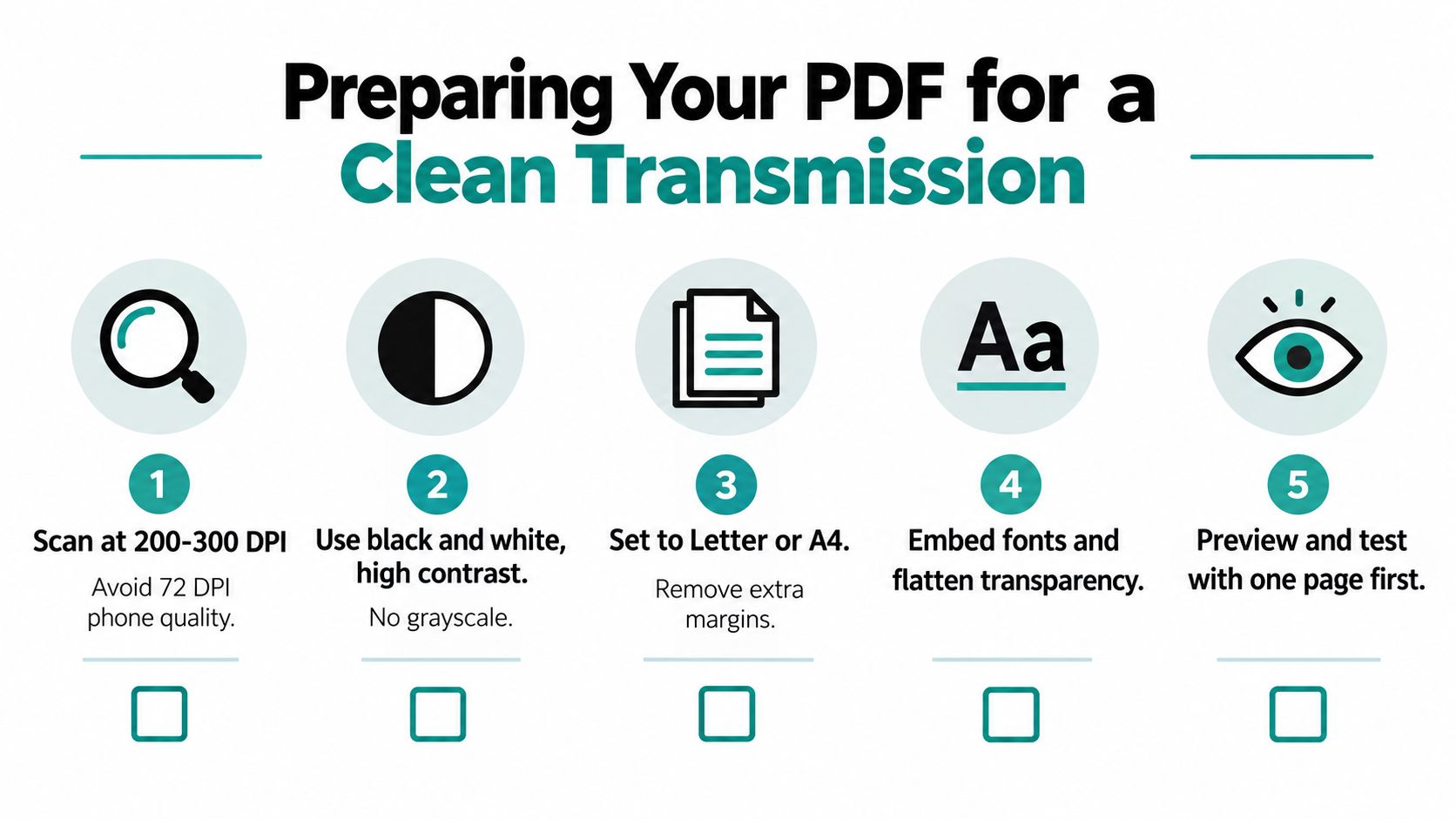
    Preparing Your Documents for a Flawless Transmission

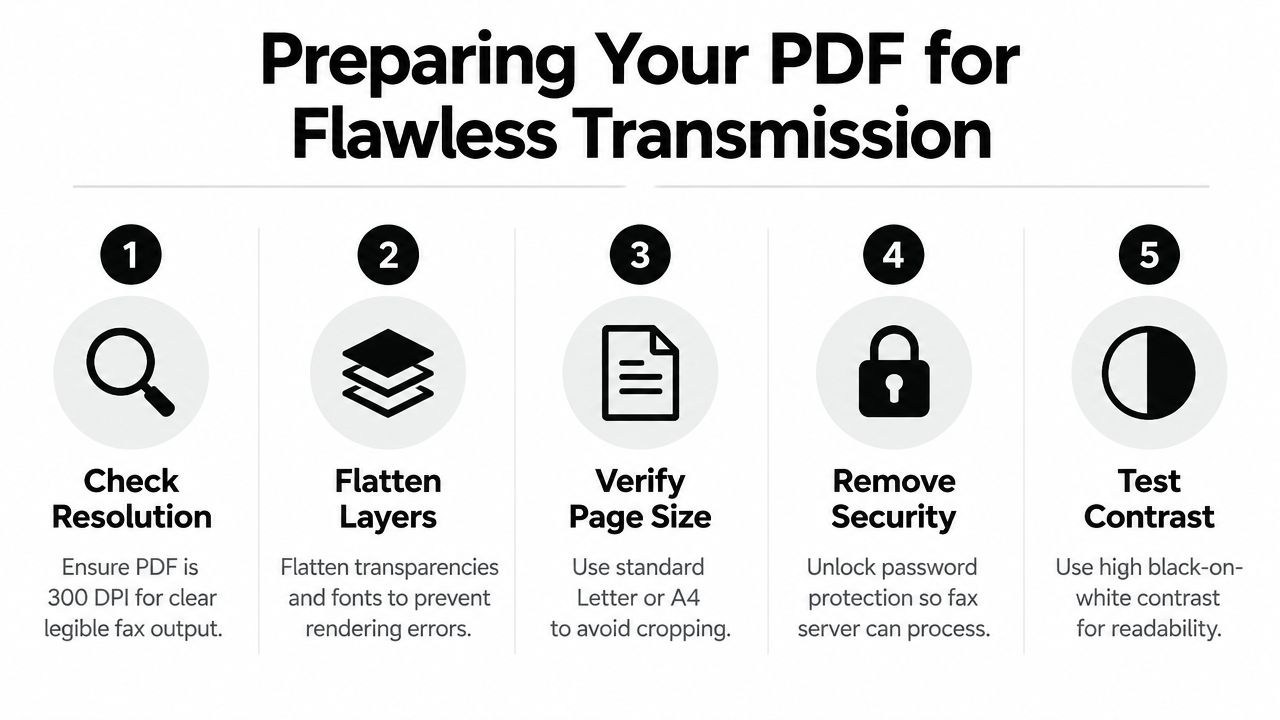
    Most fax failures start before anyone touches the keypad. Bad originals, crooked pages, missing cover information, and sloppy page order create half the trouble people blame on the machine.

    For public fax machine use, preparation matters more than people think. A shared machine won’t fix a weak original. It will magnify the weakness.

    A person preparing a stack of white documents on a desk with a coffee mug and pencil.

    Clean up the packet before you send it

    Start with the physical pages.

    • Use high-contrast originals: Dark text on white paper transmits best.
    • Remove staples and clips: Public feeders don’t forgive metal.
    • Flatten folds: Creases can cause skewed scans or feed errors.
    • Avoid double-sided pages: The receiving side may not catch the back the way you expect.
    • Check signatures and dates: Faxes often make light pen marks even lighter.

    If a document looks borderline in person, it will usually look worse after transmission.

    Build a cover sheet that does its job

    A good cover sheet isn’t decoration. It tells the receiving office what the packet is, who it’s for, who sent it, and how many pages should arrive. That gives the person on the other end a fighting chance to route it correctly.

    The fields that matter most are simple:

    • Recipient name and fax number
    • Sender name and contact information
    • Date
    • Subject or purpose
    • Total page count, including the cover sheet

    Practical rule: Count the cover sheet in the total. If you send six pages and your cover says five, the receiving office may assume one page dropped.

    A simple cover sheet template

    To: [Recipient Name]
    Fax: [Recipient Fax Number]
    From: [Your Name or Company]
    Contact: [Phone or Email]
    Date: [Month Day, Year]
    Subject: [Short description of the documents]
    Pages: [Total number of pages, including cover sheet]
    Notes: [Optional brief message]

    That’s enough for almost any routine fax. Keep it plain. Fancy formatting doesn’t help on a faxed page, and small fonts often turn muddy.

    One last office-manager rule. Before leaving, put the pages in final order and flip through them once by hand. It sounds basic because it is. It also catches missing pages more often than any machine ever will.

    How to Send Your Fax and Protect Your Privacy

    Using a public fax machine isn’t hard. Using one carefully is what separates a clean send from a bad afternoon.

    The basic process is simple. Confirm the number, load the pages, send the fax, and wait for confirmation. The trouble starts when people rush, assume the feeder orientation, or walk away before the job fully completes.

    The sending routine that works

    At the machine, use this order:

    1. Verify the fax number digit by digit. If the recipient gave you a full number, enter it exactly as provided.
    2. Check the feeder diagram. Most machines show whether pages go face up or face down. Never guess.
    3. Feed the cover sheet first if you’re using one.
    4. Watch the screen prompts carefully. Some devices ask you to press Start after scanning all pages.
    5. Stay there until the machine finishes and prints confirmation.

    That last step matters. Don’t assume the first beep means success. Some machines scan the pages in first, then attempt the transmission after that.

    A failed attempt can happen for ordinary reasons, including a busy line or a wrong number. If the confirmation sheet shows an error, read it before trying again. Repeating the same mistake just burns time and exposes the same documents to more handling.

    The privacy problem most people miss

    A lot of people still treat faxing as automatically secure. That’s outdated thinking. As noted in this discussion of modern fax machine security risks, many multipurpose fax machines now connect to external networks, which means they can carry vulnerabilities similar to other internet-connected systems. That creates a false sense of security around shared fax equipment.

    The machine itself is only one part of the privacy problem.

    • Your papers are visible in public. Other customers can glance at names, account details, or medical information.
    • Shared devices may retain data. Multifunction equipment can store job information as part of normal operation.
    • The output on the far end may sit unattended. Even if your transmission succeeds, you don’t control who picks it up first.
    • Staff involvement adds exposure. In some locations, an employee handles the pages or keying process.

    Don’t hand over sensitive documents and then wander to the snack aisle. Stay with the packet from first page to confirmation printout.

    A better security mindset

    If you regularly send records, contracts, or identity documents, treat public faxing as a last-resort method, not a default one. The safer habit is to minimize who sees the pages, how long they sit in the open, and how many devices touch them.

    For a broader look at handling sensitive files beyond fax alone, it’s worth taking a minute to learn about Superdocu's secure methods. The general principles apply well here. Fewer touchpoints and tighter control usually mean fewer mistakes.

    Keep the confirmation page too. It doesn’t solve every dispute, but it’s often the only paper trail you’ll get from a public machine.

    A Modern, Secure Alternative to Public Fax Machines

    The biggest shift in faxing isn’t that fax disappeared. It’s that the hardware stopped being the best part of the process.

    If you compare public fax machine use with online faxing, the old walk-in method loses on convenience almost immediately. You print papers, travel, wait, feed pages, pay at the counter, and hope the machine behaves. Online faxing cuts that down to a browser workflow. Upload the file, enter the recipient details, send, and keep the digital confirmation.

    A comparison chart showing the disadvantages of using public fax machines versus the advantages of online faxing.

    Why online faxing is a better fit for occasional senders

    The strongest practical advantage is control. You handle the document on your own device, from your own space, without laying pages on a public tray.

    There’s also a reliability advantage. According to Alohi’s outbound fax benchmark writeup, modern cloud-based fax services report an average outbound success rate of 94% to USA recipients, compared with a historical 80 to 85% industry standard for traditional machines. That gap makes sense in practice. Browser-based faxing removes common hardware failure points like bad feeders, paper jams, and worn components.

    For people who only fax occasionally, that change is bigger than it sounds. You don’t need to remember how a machine works if there is no shared machine involved.

    The workflow is simpler

    A modern internet fax process usually looks like this:

    • Upload the file: PDF, DOC, or DOCX is typically accepted.
    • Enter recipient details: Name, fax number, and an optional cover message.
    • Send and keep the confirmation: The status arrives digitally instead of on a paper receipt that can disappear in your car.

    If you’re comparing options, this primer on what internet faxing is gives a clear overview of how the browser-based model works.

    Here’s a quick explainer before the next point:

    Where this matters most

    This is especially useful in fields that still juggle signatures, disclosures, and attachments under deadline pressure. Real estate is a good example. Many agents now split their workflow between e-sign tools and fax-dependent counterparties, which is why a resource like agent's complete e-signing guide pairs well with a modern fax option when not every party accepts the same format.

    Online faxing works best when the recipient still requires fax but you no longer want the public-machine part of the experience.

    That’s the upgrade. You keep compatibility with fax-driven offices while dropping the trip, the waiting, and most of the exposure that comes with shared equipment.

    Frequently Asked Questions About Public Faxing

    Can I receive a fax at a public machine

    Usually, no. Public-facing machines are generally set up for sending, not for giving walk-in users a private incoming fax line. Even when a business technically could receive one for you, it’s not a great privacy setup.

    What’s the most common reason a fax fails to send

    In everyday use, it’s usually a dialing mistake, a busy line, or pages loaded the wrong way. Public machines also fail when the feeder misreads wrinkled or stapled documents.

    Is the confirmation sheet legal proof that the recipient got it

    It’s strong evidence that the transmission was attempted and completed to the number entered. It is not absolute proof that the intended person reviewed it.

    Should I fax sensitive medical, legal, or financial documents from a public location

    Only if you have no better option and the deadline matters more than the inconvenience. If you must do it, stay with the pages the entire time, use a proper cover sheet, and collect every printed receipt.

    Is online faxing easier for one-time use

    Yes. For occasional senders, it’s usually the cleanest option because you can upload a document from your device, send it without traveling, and keep a digital record of the transmission.


    If you need to send a fax without hunting down a storefront machine, SendItFax is a practical option. You can send documents from your browser to recipients in the U.S. and Canada, upload PDF, DOC, or DOCX files, and use a free option for short occasional faxes. For longer or cleaner sends, the paid option supports more pages, removes branding, and offers priority delivery.

  • Faxing a Document in 2026: The Complete How-To Guide

    Faxing a Document in 2026: The Complete How-To Guide

    You usually realize you need to fax a document at the worst possible moment. A clinic wants a signed release right now. A law office says email won’t do. A lender asks for a fax number instead of an upload link, and you’re sitting there with a PDF on your laptop and no fax machine within fifty feet, let alone in your home office.

    That situation is still common in 2026. The good news is that faxing a document is no longer tied to a beige machine in a copy room. If you need to send something quickly from a browser, phone, or borrowed laptop, you can. If you’re dealing with a hospital, insurer, court office, or old-school vendor, you may still have to.

    What matters is using the right method for the job, preparing the file properly, and avoiding the mistakes that cause failed sends or misdirected documents. That’s where problems typically arise, not from the concept of faxing itself, but from sloppy setup.

    Why You Still Need to Know How to Fax in 2026

    A lot of people assume faxing survived only by inertia. That’s not what the numbers show. The ACM report on the fax market notes that the global fax services market is projected to grow from $3.18 billion in 2022 to $5.96 billion by 2028, with a compound annual growth rate of 11.05%. The same report says more than 17 billion documents were faxed globally in 2019, and U.S. healthcare alone accounted for 9 billion.

    That tells you something important. Faxing isn't hanging on because nobody noticed the internet. It persists because certain workflows still depend on it. In regulated fields, people care about traceable delivery, established procedures, and whether the receiving office will accept the document without debate.

    Where fax still shows up

    You’re most likely to run into fax requirements in places like these:

    • Healthcare offices where referrals, records, and authorizations still move through fax-heavy workflows
    • Legal practices that want signed documents delivered in a familiar, documented way
    • Financial and real estate transactions where the other side uses older intake procedures
    • Government-facing paperwork where the process hasn’t caught up to modern file-sharing

    Practical rule: Don’t argue with the intake method when the deadline matters. If the recipient says “fax it,” the fastest move is usually to fax it correctly.

    There’s also a modern reality here. Plenty of professionals work remotely now. They don’t have a dedicated office line, and they’re not going to buy a machine for one urgent send. Knowing how to handle faxing a document from a browser is now basic office survival, in the same way knowing how to scan to PDF became basic office survival a few years ago.

    Why this still matters for occasional users

    If you fax documents every day, you already have a system. Most readers don’t. They need a method that works once, right now, without a setup project.

    That’s why the essential skill isn’t operating a machine. It’s knowing which method is simplest, how to prep the document, and how to send it without creating a bigger mess than the original deadline.

    Preparing Your Document for Successful Faxing

    Most fax problems start before you press send. The file is crooked, the pages are out of order, the scan is too faint, or the cover sheet is missing the one detail the receiving office needed to route it.

    A person in a blue shirt carefully placing a white paper onto a flatbed scanner glass.

    If you want faxing a document to go smoothly, treat it like preflight. A clean file fixes more issues than any troubleshooting trick later.

    Choose a file format that behaves well

    For online faxing, PDF is the safest default. It keeps the layout stable, travels cleanly between devices, and is less likely to shift margins or break page flow. DOCX can also work when the service supports it, but I still prefer converting final versions to PDF before sending anything important.

    Image files can be fine for simple one-page forms, but they create more opportunities for trouble. Bad contrast, skewed scans, shadows, and oversized files all make the transmitted copy harder to read.

    Use this quick checklist before sending:

    • Keep pages upright: Rotate every page so the recipient doesn’t get sideways paperwork.
    • Use a clean scan: Avoid dark backgrounds, shadows from a phone camera, and handwritten notes that crowd the form.
    • Put pages in final order: Don’t assume the receiver will sort out a mixed packet.
    • Combine related pages into one file: If your form, ID, and signed page belong together, send them as one organized document.

    If you need to combine multiple files before faxing, this complete guide on merging PDFs is a practical way to get everything into one clean packet.

    Build a cover sheet that actually helps

    A cover sheet isn’t just office theater. It tells the receiving side who the fax is for, what it is, and how many pages to expect. It also gives you one more chance to catch a wrong destination before the contents start printing.

    A usable cover sheet should include:

    1. Sender details so the recipient can call or fax back if something is missing
    2. Recipient details including the person, department, or office name
    3. Date sent so the document lands in the right workflow
    4. Total page count including the cover page
    5. Brief subject line so the recipient knows what they’re looking at

    If a fax matters, label it so a busy front desk can route it without guessing.

    Prep habits that save time

    I’ve seen people waste more time fixing preventable document issues than the actual fax transmission ever took. Good prep is boring, but it works.

    Before sending, zoom in and read your own scan on screen. If your eyes struggle, the recipient’s faxed copy won’t improve it. If the file looks rough, rescan it. That’s faster than explaining why page three is unreadable.

    The Easiest Method Faxing from Your Browser

    If you don’t own a fax machine, browser-based faxing is usually the default answer. It’s the closest thing to modern common sense. Open a site, upload the file, enter the fax number, add your cover page details, and send.

    Screenshot from https://senditfax.com/

    This method fits the way people work now. You can fax from a home office, airport gate, client site, or coffee shop without hunting down a machine, a phone line, toner, or a stack of blank cover sheets.

    How the browser workflow usually works

    Most web fax tools follow the same pattern:

    1. Upload the document

      Start with a PDF if you have one. Many services also accept DOC or DOCX files.

    2. Enter sender and recipient details

      This is where accuracy matters most. Slow down and verify the fax number before moving on.

    3. Add a cover page message if needed

      Keep it simple. Name the recipient, identify the document, and include your contact information.

    4. Review the submission

      Check page order, file name, and destination number one more time.

    5. Send and wait for confirmation

      A modern service should give you a delivery result so you’re not left guessing whether the document disappeared into the void.

    One browser-based option is SendItFax’s web fax workflow, which lets users upload DOC, DOCX, or PDF files and send to U.S. or Canadian fax numbers without creating an account. For occasional sends, that kind of setup is a lot more practical than maintaining hardware.

    Why online faxing tends to work better

    The old machine model had a lot of failure points. Busy lines. Paper jams. Toner issues. Poor scans fed through a noisy line. Online faxing removes a good chunk of that friction.

    The One Fax Now troubleshooting write-up reports that modern online fax services can reach a 98.7% transmission success rate using advanced retry mechanisms. It also says those systems can reduce a baseline failure rate of 37.7% to 9.9%.

    That lines up with what experienced admins already know. Automated retries beat standing next to a machine and redialing by hand.

    When browser faxing is the right choice

    Browser-based faxing is especially useful when:

    • You fax occasionally: No reason to keep dedicated hardware around
    • You’re remote: Your laptop and internet connection are enough
    • You need a fast send: Uploading a finished PDF is quicker than printing and rescanning
    • You want a record: Delivery confirmations are easier to manage than a curling paper receipt

    Later in the process, a short walkthrough can help if you’ve never used the format before.

    Browser faxing isn’t magic. It still depends on a clean file and a correct number. But for occasional users, it removes most of the nonsense that made faxing miserable.

    What doesn’t work well

    People run into trouble when they treat online faxing like a dump box. They upload giant, messy scans, skip the cover page, guess at the fax number, and expect the system to fix it. It won’t.

    The better approach is simple. Finalize the file first. Confirm the destination. Then send once, cleanly.

    Comparing All Your Faxing Options

    Not every faxing method is bad. Not every modern method is ideal either. The right choice depends on what you’re sending, how often you fax, and whether you need speed, physical handling, or integration with an office workflow.

    A comparison infographic showing four methods for faxing documents: online fax, traditional machines, printers, and servers.

    The four common ways to fax

    Here’s the practical comparison commonly required:

    Method Works well for Main drawback
    Online fax Occasional sends, remote work, quick turnarounds Depends on a good upload and accurate number entry
    Traditional fax machine Offices already built around paper workflows Needs hardware, supplies, and a phone line
    All-in-one printer with fax Small offices that still handle paper originals Still tied to line access and device maintenance
    Fax server software Larger organizations with centralized document flow More setup and administration than occasional users need

    Online fax for most one-off needs

    If you need to fax a document a few times a month, or a few times a year, online fax is usually the sensible choice. It doesn’t require dedicated equipment, and it works from the devices people already use every day.

    This is the method I’d point to for freelancers, remote employees, nonprofit staff, mobile sales teams, and anyone who says, “I need to send one fax today and probably won’t need another until next quarter.”

    Traditional fax machine for paper-heavy offices

    The traditional standalone machine still has one genuine strength. If your office receives paper originals all day and already has a stable workflow around a dedicated fax line, the machine may fit the way your team works.
    But it comes with familiar baggage. Someone has to keep it loaded, readable, connected, and in a place where sensitive pages don’t sit unattended. If you don’t already own one, it’s rarely worth getting one now just to fax a document once in a while.

    All-in-one printer for mixed office use

    A printer-scanner-fax combo can be a decent middle ground for a small office that already owns the hardware. You can scan physical pages directly from the feeder and send without switching devices.

    The trade-off is that you keep most of the old constraints. You still need the line, the machine, and the person standing there when something goes wrong.

    Fax server software for high-volume environments

    This is the enterprise lane. Fax server tools make sense when a business needs routing, volume handling, audit controls, or automated workflows across departments.

    Most individual users should ignore this category. It solves a real problem, just not your problem if you’re trying to fax a signed form from a laptop before lunch.

    Why legacy methods still persist

    Healthcare is the clearest example of why old and new methods coexist. The Get Codes Health overview of fax use in medical settings says that 89% of healthcare organizations still operate fax machines, and fax accounts for 70% of all communication within the industry. It attributes that reliance to interoperability problems in electronic health record systems.

    That explains why many people outside healthcare feel like they’ve time-traveled when a medical office asks for a fax. The workflow may be frustrating, but it’s still connected to the systems that office uses.

    The best fax method is the one that fits the recipient’s process and creates the least friction on your side.

    A practical decision rule

    Use this quick rule of thumb:

    • Choose online fax when you’re sending from a computer or phone and don’t need office hardware
    • Choose an all-in-one printer if you already have one connected and the originals are on paper
    • Use a traditional machine only if the office already depends on it
    • Look at fax server tools only if you manage document flow for a whole organization

    That’s the actual comparison. It’s less about nostalgia versus innovation and more about avoiding unnecessary work.

    Security Best Practices for Faxing Sensitive Information

    Faxing a document becomes a very different task when the contents include medical records, financial forms, client files, or signed contracts. At that point, speed matters less than control. A fast fax to the wrong number is still a problem.

    A secure document sits on a wooden desk with a green padlock icon representing digital protection.

    The security mindset is simple. Don’t rely on habit. Build checks into the process.

    The four safeguards that matter

    The Softlinx guidance on HIPAA fax controls identifies four key safeguards for compliant faxing: accurate recipient directories, error-catching systems, full audit trails, and end-to-end encryption.

    That’s useful beyond healthcare. Even if you’re not under HIPAA, those same controls separate a careful fax process from a sloppy one.

    Here’s how that looks in practice:

    • Accurate directories: Save frequently used fax numbers in a verified contact list instead of retyping them every time.
    • Error-catching systems: Use tools that prompt you to review details before sending and flag obvious mistakes.
    • Audit trails: Keep confirmation records so you can prove when and where the fax was sent.
    • Encryption: If you’re using an online service, encrypted transmission is the baseline, not a bonus.

    Security habits that actually help

    These are the habits worth keeping:

    1. Double-check the number

      This is still the biggest preventable mistake. If the fax contains sensitive data, verify the destination from a trusted record, not from memory.

    2. Use a clean cover sheet

      Include routing information and a confidentiality notice, but don’t stuff the cover with unnecessary private details.

    3. Avoid shared-output chaos

      Physical fax machines create a very ordinary risk. Pages print in common areas where the wrong person can see them.

    4. Keep a record of delivery

      Confirmation logs matter when someone claims the file never arrived.

    If your document needs another layer of protection before upload, a tool to add security to PDF can help you lock down the file itself before transmission.

    Why digital controls often beat a shared machine

    A lot of people still assume the office fax machine feels more official, therefore more secure. In many cases, it’s the opposite. Shared devices are easy to misuse, easy to leave unattended, and bad at producing a clean record of who handled what.

    A browser-based service with confirmations, logs, and controlled access often gives you a cleaner chain of custody than a hallway machine ever will. For a broader look at the issue, this overview of whether faxing is secure is a useful companion.

    Security is usually lost in ordinary mistakes. Wrong number. Wrong recipient name. Wrong machine. The fix is disciplined process, not wishful thinking.

    Troubleshooting Common Fax Transmission Failures

    When a fax fails, the cause usually falls into one of three buckets. The number is wrong, the document is badly prepared, or the receiving side isn’t ready.

    Start with the obvious before you do anything fancy. Recheck the fax number digit by digit. Confirm that the file type is supported. Look at the page count if you’re using a limited free service. If the scan is faint, stretched, or crooked, replace it with a better version instead of retrying the same bad file.

    The failure patterns I see most often

    These are the usual culprits:

    • Wrong destination number: A simple typo can turn a routine send into a privacy problem.
    • Unreadable scan: Low contrast, shadows, or skewed pages can make the fax unusable even if transmission succeeds.
    • File or page-limit issues: Some services reject oversized or overlong uploads.
    • Recipient-side problems: Busy lines, devices not set to receive, or paper issues can stop delivery.

    For a machine-focused checklist, this fax machine troubleshooting article covers the old-school failure points people still run into with physical devices.

    Why misdirected faxes are more than an annoyance

    The risk that gets overlooked is the misdial. The Softlinx discussion of fax cover sheet liability notes that for small businesses, the liability and documentation gaps around misdirected faxes are significant, and that cover sheets help but don’t remove the operational burden or potential legal consequences of a breach caused by a simple wrong number.

    That’s the part many casual users miss. A failed fax is irritating. A successfully delivered fax to the wrong recipient is worse.

    Treat number verification as the main safety check, not a clerical detail.

    A practical reset when nothing is working

    If repeated sends keep failing, strip the process back:

    1. Save the document as a clean PDF.
    2. Split a bulky packet into smaller parts if needed.
    3. Verify the recipient number from the original source.
    4. Ask the recipient to confirm their fax line is ready.
    5. Retry once with the cleaned-up file.

    If you’re the kind of person who likes step-by-step diagnostic lists, a general Static Forms troubleshooting guide is a good reminder to isolate one variable at a time instead of changing everything at once.


    If you need to fax a document today and don’t have a machine, SendItFax is a simple browser-based option for sending to U.S. and Canadian numbers using PDF, DOC, or DOCX files, with no account required for occasional use.

  • How Do You Fax Papers Without a Machine in 2026

    How Do You Fax Papers Without a Machine in 2026

    You get the request at the worst possible moment. A doctor’s office wants a referral sent before the end of the day. A lawyer asks for a signed form “by fax only.” A government agency lists a fax number on the paperwork and nothing else.

    That’s when people search how do you fax papers and realize the old answer no longer fits. Many don’t have a fax machine, a phone line, or any patience for figuring one out on short notice. What they need is the fastest reliable way to turn a document on a laptop or phone into a delivered fax.

    The good news is that faxing in 2026 usually means using a browser, uploading a PDF, entering the recipient’s fax number, and waiting for confirmation. The bad news is that some offices still expect fax rules from twenty years ago, so a little preparation makes a big difference.

    Why You Still Need to Fax Papers in 2026

    Someone asking you to fax a document in 2026 sounds absurd until you look at where faxing still lives. Healthcare, legal work, insurance, real estate, and government forms all still rely on it because their processes were built around it and haven’t fully moved on.

    Healthcare is the clearest example. 70% of all healthcare communication still occurs via fax in the United States, rising to 90% when fax functions inside EHR systems are included, according to medical fax usage data. That’s not a fringe use case. It’s a daily operating system for referrals, lab results, records, and authorizations.

    If you’ve ever thought, “Why can’t they just take email?”, the answer is usually workflow, compliance habits, and legacy systems. The office on the other end may route incoming documents through a fax inbox, not a shared email address. Their staff may be trained to process fax cover sheets, timestamps, and fax confirmations as part of intake.

    A lot of people only run into this once or twice a year, so they assume faxing means finding a machine at a shipping store. It doesn’t have to. For many one-off situations, the better move is to use a web-based fax method that fits the way people already work now.

    For a quick look at where faxing still shows up, this overview of what faxes are used for is a useful reality check.

    Faxing persists because the sender has changed, but the recipient often hasn’t.

    Your Three Main Options for Faxing Papers

    There are really three ways to get a document faxed today. The right one depends on whether you need to send one form right now or handle faxing as part of regular office work.

    An infographic showing the three main ways to fax papers using a machine, service, or printer.

    Traditional fax machine

    A standalone fax machine still works if you already have one connected and maintained. In a few legacy offices, that setup is normal.

    The trade-off is obvious. You need paper, toner, a phone connection, and enough patience to deal with jams, redials, and physical confirmation slips. If you’re at home, traveling, or working remotely, this is usually the least practical option.

    Fax-enabled multifunction printer

    An all-in-one printer with fax capability is the middle ground. You can scan, print, and fax from one office device, which makes sense for small businesses that still handle paper originals.

    This works best when the printer is already configured and someone on staff knows how to use the fax features. It works poorly when nobody remembers how it was set up, the line isn’t active, or the document starts as a digital file anyway. In those cases, you end up printing a PDF just so you can scan it back into the same machine.

    Online fax service

    Often, online faxing is the fastest path. You upload a document, enter the sender and recipient information, and let the service handle delivery. No machine. No dedicated line. No hunting for a print shop before closing time.

    Here’s the practical comparison:

    Option Best for Main downside
    Traditional fax machine Legacy offices with established fax workflows Hardware, paper handling, and setup friction
    Multifunction printer Small offices that already use one device for everything Still depends on physical equipment and line configuration
    Online fax service Occasional sends, remote work, and urgent one-off documents You still need to prepare the file carefully and verify the number

    Working rule: If the document already exists as a PDF or Word file, sending it online is usually the cleanest option.

    How to Fax Papers Online with SendItFax

    If your goal is simple, “I need to fax this paper right now,” a browser-based workflow is the shortest route from file to confirmation. One example is Send a fax from the web, which outlines the no-machine process.

    Get the document ready first

    Before you touch the fax form, prepare the file. Often, people lose time during this step.

    Use a PDF, DOC, or DOCX file. If your pages came from a phone camera or scanner app, check that they’re upright, readable, and in the correct order. If the recipient asked for a signed page, confirm the signature is visible before upload.

    Keep the document lean. Large, messy files create more chances for failed delivery or unreadable pages on the other end.

    Fill in the fax details carefully

    In a browser-based fax form, you’ll usually enter:

    1. Your name and contact details so the recipient can identify the sender
    2. The recipient’s fax number exactly as provided
    3. An optional cover message if the office expects context
    4. The uploaded document

    The biggest avoidable mistake is typing the number too quickly. One wrong digit sends your document into a void, or worse, to the wrong office. For medical, legal, and financial paperwork, that’s not a small error.

    Choose the plan that matches the job

    For a one-page form, a free option may be enough. For a client-facing packet, signed agreement, or anything time-sensitive, a paid send is often the safer choice because it gives you a cleaner presentation and faster handling.

    Here’s the practical breakdown.

    SendItFax Plans at a Glance

    Feature Free Plan Almost Free Plan ($1.99)
    Cost Free $1.99
    Page limit Up to 3 pages plus a cover Up to 25 pages
    Daily sending Up to 5 free faxes Per fax purchase
    Branding on cover Yes No
    Cover page Included Can be omitted
    Delivery handling Standard Priority delivery
    Payment None Stripe

    The free route makes sense for simple personal forms. The paid route fits documents where appearance, page count, or timing matters more.

    Send and watch for confirmation

    Once you submit the fax, don’t assume the job is done until you get delivery status. That confirmation matters because faxing still depends on the receiving endpoint being available and able to accept the document.

    Retry logic proves its worth. For web-based e-faxing, upgraded systems reduced initial failures from 37.7% to 9.9% and achieved 98.7% automatic delivery success, with an average of 1.59 retry attempts per successful fax, according to the cited e-fax delivery analysis.

    That’s why modern online faxing works better than manually pressing redial. The service can retry when the line is busy or the first attempt doesn’t complete cleanly.

    If the fax is urgent, stay with the task until you see confirmation. Uploading the file is only the first half of the job.

    When to Use Physical Faxing Alternatives

    Sometimes the online route isn’t the best fit. If the only copy is a stack of paper sitting in your hand and you don’t have a scanner app, a physical fax option can still save the day.

    A person in a green sweater holding a paper stands next to a large office fax machine.

    Local print and shipping stores

    A staffed location helps when you have originals, attachments, or handwritten pages that you’d rather not photograph on your phone. It’s also useful if you’re helping someone who isn’t comfortable uploading files or entering form data online.

    The downside is privacy. If the documents contain medical details, account information, or signed contracts, you’re handling them in a public place around shared equipment.

    Office printer with fax capability

    A home office or small business printer can be useful if it already has a working fax setup. This is common in businesses that still process paper-heavy forms.

    It’s less useful for occasional users. If the line isn’t active or the fax function hasn’t been configured, getting it working can take longer than sending the document another way.

    When paper matters

    If you’re faxing a signed agreement, review the paperwork itself before choosing the method. This solopreneur contract guide is a solid refresher on what to check before you send any contract anywhere, by fax or otherwise.

    Public fax counters are a convenience tool, not a privacy-first workflow.

    Essential Tips for Secure and Successful Faxes

    Faxing isn’t hard. Reliable faxing takes a little discipline.

    A digital screen notification confirming that a secure fax has been sent successfully from an office.

    If you want the document to arrive correctly, be readable, and stay in the right hands, focus on the small steps people tend to rush through.

    Start with file quality

    A faxed page is only as good as what you upload or scan. Crisp black text on a clean white background usually transmits better than low-contrast photos, skewed scans, or screenshots buried in extra margins.

    Use these habits:

    • Prefer PDF when possible: PDF keeps formatting stable and avoids surprises with fonts or layout shifts.
    • Check page order: Multi-page files often get assembled out of sequence after scanning.
    • Avoid oversized batches: Long uploads create more opportunities for transmission trouble and poor readability.
    • Remove irrelevant pages: Don’t fax extra terms, blank pages, or duplicate scans just because they’re in the file.

    Verify the recipient like it matters

    It does matter. Faxing the wrong number can expose private information and force you to start over.

    Check the number against the original request, not a half-remembered contact list. If the office gave you a department name, include that on the cover page or in the message field so the document lands with the right team.

    For security-sensitive situations, this overview of whether faxing is secure gives a practical baseline.

    Don’t confuse sending with delivering

    A lot of people hit submit and move on. That’s how deadlines get missed.

    Analog faxing averages 95% success, while e-faxing averages 92% to 95% because of extra server steps. Services with automatic retry logic can push final delivery success to over 98%, according to HIPAA fax reliability benchmarks. The lesson isn’t that online fax is weak. It’s that retry logic and confirmation are the parts that make it dependable.

    A short visual walkthrough can help if you’re showing someone else the process:

    Security habits worth keeping

    Some rules are simple and absolute:

    • Avoid public machines for sensitive records: Shared counters and unattended trays create unnecessary exposure.
    • Use clear sender identification: The recipient should know who sent the fax and how to contact you if a page is missing.
    • Stay until confirmation appears: Especially for urgent legal, medical, or payroll documents.
    • Limit access to the file before sending: Don’t leave the document open on a shared computer or printer queue.

    A fax that reaches the wrong person on time is still a failed fax.

    Troubleshooting Common Fax Failures

    Most fax failures aren’t mysterious. They usually come down to the recipient line being busy, the destination machine rejecting the connection, the file being awkward to process, or the number being wrong.

    A woman looks concerned at a computer monitor displaying a failed fax transmission error message.

    A useful mindset is this: failed once doesn’t mean impossible. It often means “fix one thing and try again.”

    What the common errors usually mean

    A busy signal usually means the receiving line is occupied. A no answer or communication error often points to a recipient-side machine issue, poor connection path, or a fax endpoint that isn’t responding cleanly. A failed delivery notice from an online service may also reflect full memory or compatibility problems on the receiving side.

    This isn’t rare. A 2025 FCC report noted that 15% of U.S. business faxes fail on the first attempt due to recipient-side issues like busy signals, full memory, or incompatible machines, as summarized in this online fax failure overview.

    What to do next

    Use a short checklist instead of guessing:

    • Recheck the number: One incorrect digit is still the most common human error.
    • Retry later: Busy offices often clear backlog after a short wait.
    • Split large files: If the document is long, break it into smaller batches.
    • Use cleaner formatting: Convert odd file types into a straightforward PDF.
    • Call the recipient if it’s urgent: Ask whether their fax line is active and whether they received anything partial.

    When a fax fails, the fastest fix is usually verifying the destination first, not rebuilding the document.

    Frequently Asked Questions About Faxing

    Do I need my own fax number to send a fax

    Usually, no. Many web-based fax tools let you send a document without setting up a dedicated fax number first. You still need to provide sender details so the recipient knows who sent it.

    Can I fax a document from my phone

    Yes, if you can upload the file from your phone browser. A clean PDF works better than a blurry photo gallery image, so it’s worth scanning the document properly first.

    Can I fax Word documents, or does it have to be a PDF

    Many services accept DOC, DOCX, and PDF files. PDF is usually the safest choice because the formatting is less likely to shift during processing.

    Is online faxing acceptable for medical or legal paperwork

    It can be, if you use a secure service and follow the recipient’s instructions carefully. The big issue is less about the concept of online faxing and more about whether you send the right file, to the right number, with proper confirmation.

    Can I fax to any country

    It depends on the service. Some browser-based tools only support certain destinations. Always check coverage before you prepare the file if the recipient is outside the United States or Canada.


    If you need to fax something today and don’t have a machine, SendItFax is a straightforward browser-based option for sending documents to U.S. and Canadian fax numbers without creating an account. Upload a PDF, DOC, or DOCX file, enter the recipient details, and use the free or paid option based on page count and urgency.

  • HIPAA Email Disclaimer: A Practical Guide for 2026

    HIPAA Email Disclaimer: A Practical Guide for 2026

    Most advice on the hipaa email disclaimer gets the main point backwards. It treats the footer as the compliance solution, when it's really a weak administrative signal attached to a risky channel.

    If you're managing a clinic, use a disclaimer. But don't confuse using one with protecting PHI. A disclaimer can warn, instruct, and document intent. It can't encrypt a message, stop a staff member from sending to the wrong address, or satisfy the technical safeguards HIPAA expects for electronic protected health information.

    The Truth About HIPAA Email Disclaimers

    A hipaa email disclaimer started as a risk-mitigation habit, not as a HIPAA mandate. After HIPAA was enacted on August 21, 1996, healthcare organizations gradually adopted email disclaimers as email became a routine way to communicate, and by the late 2000s they had become common practice even though HIPAA never explicitly required them, as noted by AccountableHQ's discussion of HIPAA disclaimer history and best practices.

    An old CRT monitor displaying an email disclaimer next to a tablet screen showing No Email.

    That origin matters. A disclaimer was never designed to be a technical control. It was designed to do something much narrower: tell the recipient that the message may contain PHI, restrict unauthorized use, and instruct an unintended recipient to delete the message and notify the sender.

    What a disclaimer actually does

    A good disclaimer helps with four practical tasks:

    • Flags sensitive content: It tells the reader the message may contain PHI.
    • Names the intended audience: It limits use to the addressed recipient.
    • Gives misdelivery instructions: It tells the wrong recipient to delete and notify.
    • Supports policy consistency: It shows staff are using approved language.

    That's useful, but limited.

    Practical rule: Treat the disclaimer like a label on the envelope, not the lock on the door.

    Clinic managers often inherit footer language that sounds legal and therefore feels protective. That's where trouble starts. A long footer can create the impression that someone has solved the email risk problem. They haven't. They have added a warning to the end of a message.

    Why the myth persists

    The myth survives because disclaimers are easy. They're cheap, quick to deploy, and visible to everyone. Encryption, access controls, workflow changes, and vendor review take more work.

    In practice, the safest communication programs use disclaimers only as a minor supporting layer. If you're reviewing your broader communication stack, a resource on ensuring secure patient outreach for providers is useful because it frames email as just one part of patient communication risk, not the whole picture.

    A clinic that relies on a footer alone is relying on a notice after the message has already left the building.

    Legal Limitations and Why Disclaimers Fail

    When a breach happens, regulators don't care that your footer sounded serious. They care whether you had safeguards that reduced the chance of exposure.

    HHS OCR breach trends cited by Paubox show healthcare has the highest breach numbers, with 30% of all major incidents being hospital-related, and the same source notes that PHI on black markets is valued at 50 times more than credit cards. That combination explains why passive warnings aren't enough, as discussed in Paubox's analysis of why disclaimers are not enough for HIPAA compliance.

    An infographic titled Why Email Disclaimers Fall Short, outlining four reasons why they are legally insufficient under HIPAA.

    The four failure points

    A disclaimer fails in real incidents for basic reasons.

    1. It doesn't encrypt anything.
      If PHI is intercepted in transit, the disclaimer doesn't make the contents unreadable.

    2. It doesn't stop misdelivery.
      Once staff send to the wrong address, the footer arrives with the mistake.

    3. It doesn't create legal immunity.
      The clinic still owns the compliance obligation.

    4. It doesn't replace security controls.
      HIPAA expects technical and administrative safeguards, not just warnings.

    A disclaimer is evidence that you tried to communicate expectations. It isn't evidence that you protected the data.

    What enforcement teaches clinic managers

    The practical lesson from enforcement actions is blunt. Investigators look for controls such as encryption, access management, vendor agreements, and logging. They don't treat a footer as a cure for insecure workflow design.

    That matters for managers deciding how staff should send lab results, referral packets, intake forms, and treatment documentation. If the channel itself is weak, adding a disclaimer doesn't change the underlying risk. It only changes the wording attached to the risk.

    For teams comparing channels, this breakdown of whether faxing is more secure than email is a better starting point than another disclaimer template, because the primary decision is usually about transmission method, not footer phrasing.

    The trade-off people miss

    Disclaimers do have value. They can help establish a standard response if the wrong person receives a message. They can reinforce staff habits. They can signal that your organization understands PHI sensitivity.

    But they also create a management problem when leadership overestimates them. Staff begin to think, "The email had the HIPAA language, so we were covered." That assumption is exactly what leads to weak operational discipline.

    How to Draft an Effective Disclaimer

    If you're going to use a hipaa email disclaimer, make it short, clear, and tied to actual policy. Don't write it like a courtroom brief.

    Paubox notes three common drafting problems: overly long text carries a 40% truncation risk in Gmail, jargon leads to 30% misinterpretation, and automation can reduce human error by 95% when organizations stop relying on staff to paste disclaimers manually, as explained in Paubox's guide to what a HIPAA email disclaimer should include.

    The parts worth keeping

    A practical disclaimer should usually include:

    • A confidentiality notice: Say the email may contain PHI or confidential health information.
    • A recipient limitation: State it's intended only for the named recipient.
    • Misdelivery instructions: Tell unintended recipients to delete the message and notify the sender.
    • A use restriction: Prohibit unauthorized review, disclosure, copying, or distribution.
    • A contact path: Give a privacy office or sender contact if appropriate.

    Don't use the disclaimer to make broad claims about security unless your systems and policy support those claims.

    Copy-ready templates

    Use these as starting points, then have privacy or counsel approve final language.

    Standard external disclaimer

    This email may contain protected health information and is intended only for the named recipient. If you received this message in error, please notify the sender and delete the email and any attachments without forwarding, saving, or disclosing them. Unauthorized review, use, or distribution is prohibited.

    Encrypted-message disclaimer

    This message was sent through our secure email process and may contain protected health information intended only for the recipient. If you are not the intended recipient, please notify the sender and delete all copies of this message and any attachments. Do not copy, share, or use the contents.

    Patient-choice disclaimer

    At your request, we may communicate with you by email. Email can carry privacy risks if it is not secure. If you prefer a different communication method, contact our office.

    The third version is intentionally restrained. Don't let staff treat it as a substitute for documenting consent or choosing a safer channel.

    For clinics that also send documents by fax, this example library of a confidential statement example helps align cover-page language with the same plain-language approach.

    HIPAA disclaimer content do's and don'ts

    Do Don't
    Use plain language that a non-lawyer can understand Write dense legal text that staff and recipients won't read
    Put the delete-and-notify instruction early Bury the action step after a long block of warning text
    Apply one approved version consistently Let each employee edit their own version
    Match the wording to your actual process Claim security features you don't have
    Keep it readable in replies and forwards Use a footer so long it gets truncated

    Manager's shortcut: If a patient or front-desk employee can't explain the footer in one sentence, it's too long.

    What not to promise

    Don't write "this email is secure" unless you're certain it was sent through a secure process every time. Don't imply patient consent where none has been documented. Don't turn the disclaimer into a paragraph about every privacy law your organization has ever heard of.

    A disclaimer works best when it does one job well: tell the wrong recipient what to do next.

    Implementing Disclaimers with Supporting Controls

    A disclaimer should be automated, centrally managed, and backed by policy. If staff can delete it, rewrite it, or forget it, you don't have a standard. You have a suggestion.

    A hand pointing at the email automation settings screen on a laptop display in a bright office.

    Typewire's guidance on HIPAA-compliant platforms emphasizes the controls that matter: a signed Business Associate Agreement, end-to-end encryption, and detailed audit trails. The same source says OCR audits favor services with a BAA, reducing violation findings by 60%, and notes that 75% of covered entities achieve compliance only after implementing these broader measures, not by footer language alone, according to Typewire's guide to secure hosted email platforms and disclaimers.

    How to deploy the footer correctly

    If you're using Google Workspace or Microsoft 365, configure the disclaimer centrally through admin controls or mail-flow rules. The core idea is the same on either platform:

    • Set one approved external disclaimer: Avoid department-by-department improvisation unless there's a real workflow need.
    • Append it automatically to outbound mail: New, reply, and forwarded messages should all follow policy.
    • Test plain text and HTML versions: Some clients strip formatting.
    • Check placement in real threads: Long chains can hide or duplicate footers.

    What auditors expect beyond the footer

    The footer is only credible when it reflects a real compliance environment. That means having the basics in place:

    • Vendor governance: If a service touches PHI, get the BAA in place before use.
    • Access controls: Limit who can see what inside the email environment.
    • Audit trails: Make sure your system can show who accessed and transmitted information.
    • Staff training: Front desk, billing, nursing, and management need channel rules they can follow.
    • Escalation rules: Staff need to know when to stop emailing and switch to a secure portal, secure email workflow, or fax.

    A short demonstration helps nontechnical managers see what centralized configuration looks like in practice.

    A workable clinic policy

    The cleanest policy is usually simple: all outbound messages get the disclaimer, but PHI only goes through approved secure workflows. That reduces staff guesswork.

    "Use the footer everywhere. Use standard email selectively. Use secure channels by default when PHI is involved."

    That sentence is easier to train than a page of exceptions.

    Better Alternatives for Transmitting PHI Securely

    If a disclaimer is the weakest layer, what should replace the false sense of safety it creates? Better channels.

    Healthcare still relies on fax more than many people outside the industry expect. According to HIPAA Journal, 35% of U.S. providers still relied on fax in 2025, and 18% of 2025 breaches involved fax misdelivery, which is a reminder that fax isn't magically safe either. It still requires the safeguards expected under the HIPAA Security Rule, as noted in HIPAA Journal's discussion of email and fax compliance considerations.

    A tablet on a wooden desk displaying a secure messaging app with HIPAA-compliant encrypted communication interface.

    The protection ladder

    Think about communication options in tiers.

    Method What it helps with Main weakness
    Email with disclaimer only Warns recipients and standardizes language Doesn't secure PHI
    Encrypted email with BAA and logs Protects content in transit and improves oversight Still depends on proper configuration and staff use
    Secure portal messaging Keeps communication inside a controlled environment Patients may resist portal use
    Online fax with proper controls Fits document-heavy healthcare workflows and established recipient habits Wrong-number and routing errors still need process controls

    Where online fax fits

    For clinics sending referrals, signed forms, authorizations, records, and insurance documents, fax often remains the most practical workflow. Modern browser-based fax tools remove the machine, toner, and dedicated line, but the compliance question doesn't disappear. You still need correct recipient details, sensible cover-page language, and a process that matches the sensitivity of the document.

    One option in that category is HIPAA-compliant fax service, including browser-based tools such as SendItFax for sending DOC, DOCX, and PDF files to U.S. and Canadian fax numbers without a physical machine. That's useful for occasional transmissions when staff need to send forms or records quickly, but the same rule applies here as with email: a cover-page disclaimer supports the workflow, while the secure transmission process does the essential compliance work.

    Match the tool to the task

    Use encrypted email when the conversation needs back-and-forth and the platform is already managed properly. Use secure portals when the patient relationship is ongoing and you need tighter control. Use online fax when the workflow is document-centric and the recipient still operates in a fax-based environment.

    If your process includes signatures on authorization documents, this guide to e-signing HIPAA forms is useful because it deals with another point where clinics often fall back to insecure email attachments unnecessarily.

    The safest workflow is usually the one staff can follow correctly every time without workarounds.

    That's why "just add a disclaimer" is poor advice. It asks staff to keep using the risky channel and pretend the warning at the bottom changed the risk profile.

    HIPAA Email Disclaimer FAQs

    Clinic managers usually ask the same handful of questions once they stop treating the disclaimer as a cure-all. Here are the direct answers.

    Do we need a hipaa email disclaimer on internal emails too

    Usually, yes, if your organization wants a uniform policy. Internal mail can still be forwarded, misaddressed, printed, or accessed by the wrong person. A shorter internal version often works better than a long external legal notice.

    The point of the internal footer isn't legal theater. It's reinforcing handling expectations for staff.

    If a patient emails us first, can we just reply normally

    Not automatically. A patient's choice to use email doesn't erase your responsibility to use reasonable safeguards or follow stricter state rules that may require affirmative consent for unencrypted email in some jurisdictions, as noted earlier. If your clinic allows patient-directed email communication, document the process and make sure staff know when to move the conversation to a safer channel.

    A good operational rule is to avoid sending detailed clinical content through ordinary email just because the patient started there.

    Is patient consent enough to skip encryption

    Consent helps with communication preferences. It doesn't convert an insecure workflow into a secure one. If your staff can use encrypted email, a portal, or another controlled method, that's still the better practice for PHI.

    Managers run into trouble when staff hear "the patient said email is fine" and interpret that as unlimited permission to send anything.

    Should we put the disclaimer on fax cover pages too

    Yes, as a best practice. A fax cover page disclaimer can warn the recipient, identify confidential content, and instruct a wrong recipient to destroy the material and notify the sender. It serves the same limited purpose as an email footer. It doesn't fix a bad fax number or make a weak process compliant by itself.

    What's the biggest mistake clinics make with disclaimers

    They treat them as the control instead of the reminder. The actual controls are the ones that change how PHI is transmitted, accessed, logged, and governed.

    If you're redesigning workflow more broadly, this case study on improving healthcare workflows is worth reviewing because it shows the bigger operational truth: compliance improves when communication processes fit how staff work, not when teams are asked to remember one more footer.

    A clinic manager's job isn't to collect compliance-looking language. It's to reduce avoidable exposure while giving staff a process they can follow under pressure.


    If your team still needs to send document-based communications to U.S. or Canadian recipients, SendItFax is one browser-based option for transmitting DOC, DOCX, and PDF files without a fax machine. For healthcare use, the practical approach is simple: use clear cover-page confidentiality language, verify recipient details carefully, and reserve ordinary email disclaimers for their proper role as a warning, not as your primary PHI protection strategy.

  • Send Fax Online Canada: Easy Guide for 2026

    Send Fax Online Canada: Easy Guide for 2026

    You usually need to fax something at the worst possible moment. A clinic asks for a signed form. A lawyer’s office wants paperwork today. A government department still lists a fax number and nothing else. You don’t own a fax machine, you don’t want a subscription, and you need proof that the document went through.

    That’s where no-account, pay-per-use online faxing makes sense. If you only send a fax once in a while, a monthly plan is friction you don’t need. The fastest route is usually a browser, a clean PDF, the right Canadian fax number format, and a service that gives you a delivery result without turning the job into a software commitment.

    Why You Still Need to Send a Fax in Canada

    If faxing feels outdated, that reaction is fair. But the practical problem hasn’t gone away. In Canada, over 40% of businesses still rely on fax machines for sending and receiving documents, especially in healthcare, legal, and government settings, according to this overview of fax use in Canada.

    A person looking frustrated while sitting at a desk next to an old-fashioned fax machine.

    That matters because the recipient’s workflow decides the format, not your preference. If a medical office, law firm, insurer, or public agency still files incoming documents by fax, emailing a PDF won’t always solve the problem. The document may be ignored, delayed, or kicked back with a request to fax it properly.

    A lot of people only discover this when they’re already on a deadline. They search “send fax online canada,” click through a few services, and run straight into account creation, trial offers, or subscription plans meant for ongoing business use. That’s overkill for one referral form, one signed authorization, or one contract package.

    Where the no-account option fits

    The useful middle ground is a web-based fax service that lets you upload a file, enter sender and recipient details, pay only if needed, and move on. That’s the bridge between old receiving systems and modern work habits.

    Practical rule: If you fax less often than you replace printer ink, you probably don’t need a subscription.

    For occasional users, speed matters more than advanced inbox features. You need a clean send, a readable cover page if required, and confirmation after the transmission. That is the essential job.

    If you want context for why offices still insist on fax at all, this breakdown of what faxes are used for is worth skimming. It mirrors what office staff deal with every day. Faxing isn’t modern, but it’s still embedded in real Canadian workflows.

    Preparing Your Documents for Flawless Delivery

    Most failed faxes start before you hit send. The issue usually isn’t the website. It’s the file.

    Use PDF unless you have a reason not to

    Online fax services often accept PDF, DOC, DOCX, PNG, GIF, and JPEG. In practice, PDF is the safest choice because it keeps your layout stable. Signature blocks stay where you put them. Checkboxes don’t drift. Margins don’t shift because the receiving system handled fonts differently.

    DOC and DOCX files can work, but they add risk. If the service converts them differently than you expected, page breaks can change. That’s a problem for forms, contracts, and anything with tightly placed signatures or initials.

    A simple prep checklist helps:

    • Save final versions as PDF: Do this after all edits are done.
    • Check page order: Many urgent fax jobs fail because the wrong version was uploaded.
    • Review legibility: Small gray text often looks worse after fax conversion.
    • Remove passwords from files: Protected files commonly get rejected by fax gateways.

    Turn paper into a clean digital scan

    If the document only exists on paper, scan it with your phone before uploading it. Good lighting matters more than fancy equipment. Put the page on a dark, flat surface, avoid shadows, and crop tightly so the text fills the frame.

    Don’t photograph paperwork at an angle. That creates distorted edges and faint text near the corners. If the document includes handwriting, zoom in before sending and make sure the signature is readable.

    A fax doesn’t improve a bad scan. It preserves the problems you upload.

    If you’re sending documents in another language or supporting paperwork for immigration, legal, or administrative use, it helps to get reliable document translation before faxing the final version. That avoids the common mess of sending one version now and correcting it later under deadline.

    Keep the file manageable

    For occasional online faxing, smaller and cleaner usually works better than oversized, image-heavy files. If your packet is full of high-resolution photos, compress it before uploading. If you can separate exhibits from the main form, do that.

    Also check whether your pages are necessary. A lot of one-off fax jobs don’t need every email thread, duplicate ID copy, or extra instruction page. Send what the recipient asked for, not your whole folder.

    Choosing Your Faxing Plan Free vs Paid

    Most articles about send fax online canada push you toward a monthly account. That misses the practical use case for occasional senders. As noted in this review of the category gap, many guides focus on subscriptions instead of no-account, one-off Canadian faxing.

    That’s why the first decision isn’t “which subscription should I buy?” It’s simpler than that. Ask whether this fax is casual, professional, or time-sensitive.

    A comparison chart outlining the pros and cons of using free versus paid online faxing services in Canada.

    When free is enough

    A free online fax option is usually fine when:

    • The document is simple: A short form, a request letter, or a basic signed page.
    • Branding doesn’t matter: Some free sends place service branding on the cover page.
    • You’re not in a rush: Free queues can be less ideal for urgent business delivery.
    • The recipient is administrative: A general office inbox or standard intake line is often less sensitive to presentation.

    When paid is the smarter choice

    A paid one-off send makes more sense when:

    • The fax is client-facing: Contracts, case materials, and professional records should look clean.
    • You need more pages: Longer packets usually fit paid plans better.
    • Timing matters: Priority handling can help when a document must go out now.
    • You want no extra branding: That matters for legal, healthcare, and polished business communication.

    Here’s a practical side-by-side based on SendItFax’s published options.

    Feature Free Plan Almost Free Plan ($1.99)
    Cost Free $1.99 per fax
    Page limit Up to 3 pages plus a cover Up to 25 pages
    Cover page branding Yes No
    Cover page Included Optional, can be omitted
    Delivery handling Standard Priority delivery
    Account required No No

    One no-account option is SendItFax’s comparison-friendly online fax service overview. It offers a free send for short documents and a paid one-off tier for longer or cleaner presentation, without forcing registration.

    Free works for “I need this sent.” Paid works for “I need this sent properly.”

    That distinction saves time. People often waste more effort dodging a small one-time fee than they would spend just sending the fax correctly the first time.

    How to Send Your Fax Online A Step-by-Step Walkthrough

    The actual workflow is short. The details are what make it reliable.

    A person using a laptop to send a digital fax with a Canadian theme interface

    Enter the fax number in the Canadian format that works

    For delivery to Canada, the fax number should be entered as 1 + 10-digit area code + number. Leaving out the area code is a frequent error, and service logs cited here say omitting it can cause up to 40% of North American routing failures.

    That means you should enter the number as one full North American number, not as a local shortcut. If the office gave you a number on letterhead, double-check that it includes the correct area code before you send anything.

    Common mistakes include:

    • Skipping the area code: This is the biggest avoidable problem.
    • Typing a phone line instead of a fax line: Offices often publish both.
    • Copying punctuation errors: Parentheses and spaces usually don’t matter, but wrong digits do.
    • Using an outdated number: Older forms sometimes list lines that no longer handle faxes.

    Add sender details the recipient can recognize

    Use your real name or the business name the recipient expects. If the office is waiting for records from you, don’t send from a vague identifier that forces staff to guess who the fax belongs to.

    Your email matters too, because this is usually where the delivery confirmation or failure notice goes. If you’re sending for work, use the inbox you regularly monitor.

    A short cover message can help. Keep it plain. State what’s attached, who it concerns, and a callback number if the office needs clarification.

    The cover note isn’t where you explain the whole case. It’s where you help the receiving clerk route the document fast.

    Upload the right file version

    Before you upload, open the file once. Make sure it’s the signed copy, not the draft. Make sure the scan isn’t sideways. Make sure all pages are there.

    For visual learners, this quick walkthrough shows the browser-based process in action:

    If the service gives you a choice between a free send and a one-time paid send, decide based on page count, branding, and urgency. For a one-page form, free may be enough. For a longer client packet, the paid option usually avoids unnecessary friction.

    Send it and watch for confirmation

    Once you submit the fax, don’t assume silence means success. Wait for the email result. Good online fax services typically send a status message showing whether the fax was delivered or failed.

    A success notice is your practical proof of delivery. Save it. If the recipient later says they didn’t receive the document, that confirmation gives you a timestamp and a record that the transmission completed.

    If it fails, act on the reason instead of blindly retrying. Busy line, invalid number, or file issue each points to a different fix.

    Security Legal Considerations and Troubleshooting

    Traditional faxing feels secure because it’s familiar. In practice, it can be messy. According to reporting summarized by the IAPP, traditional fax machines remain a leading cause of privacy breaches in Canada, particularly in Ontario healthcare, due to misdirected faxes.

    A digital tablet displaying a large green lock icon on the screen with Secure Faxing text below.

    That’s one reason browser-based faxing can be the safer option for many occasional users. You avoid paper sitting on a shared machine. You can review the recipient number carefully before sending. You also get a delivery trail, which matters when the document contains personal, legal, or financial information.

    What to look for if the fax is sensitive

    If you’re sending medical forms, legal records, or real estate paperwork, look for a service with clear privacy terms and straightforward handling of uploaded documents. Canada’s privacy environment matters here, especially for professionals who deal with personal information.

    This practical guide on the security of fax is useful if you want a plain-language explanation of what to verify before uploading sensitive files.

    A few checks go a long way:

    • Read the privacy policy: Don’t skip this if the fax contains personal data.
    • Use the exact recipient fax number: One digit off can send private material to the wrong office.
    • Limit what you send: Include only the pages needed for the task.
    • Keep the confirmation email: It’s part of your record.

    Fix the common failure points first

    When a fax doesn’t go through, the fix is usually simple.

    Problem What to check
    Busy signal or temporary failure Wait a bit and resend
    Invalid number Recheck every digit and confirm it’s a fax line
    Missing pages Reopen the file and confirm the upload version
    Poor readability Rescan the document with better lighting and contrast
    Recipient says nothing arrived Confirm the number and compare with your delivery result

    If a fax fails twice, stop resending and verify the number with the recipient’s office.

    That saves more time than repeated blind attempts.

    Frequently Asked Questions About Online Faxing

    Can I send a fax to Canada from my phone

    Yes. If the service works in a browser, you can usually send from a phone, tablet, or laptop. The main thing is file quality. A phone is fine if the PDF or scan is readable.

    Is an online fax accepted the same way as a machine fax

    In most office workflows, yes. The receiving side generally cares that the fax arrived at the correct number and is legible.

    What if the recipient line is busy

    Most services will report a failed or delayed transmission. Check the status email, wait, and resend if needed. If the line stays busy, call the office and confirm the fax number.

    Do I need to worry about Canadian privacy rules

    Yes, especially if you’re sending sensitive records. As noted by AFAX’s discussion of compliance gaps around PIPEDA, many online guides barely address privacy handling, even though healthcare and legal users need to check it carefully. Read the service’s privacy terms before uploading confidential documents.

    Should I choose free or paid for a one-time fax

    Use free for short, low-stakes documents. Use paid when presentation, page count, or urgency matters more than saving a small amount upfront.


    If you need to send a fax right now without a machine or a subscription, SendItFax is built for that exact one-off job. You can send to U.S. and Canadian fax numbers from a browser, upload DOC, DOCX, or PDF files, use the free option for short faxes, or choose the paid one-time send for longer documents and a cleaner cover page.

  • How to Send a Fax with Outlook (The Easy Way)

    How to Send a Fax with Outlook (The Easy Way)

    You open an email in Outlook, see the signed form or contract attached, and assume there must be a quick way to fax it out. Then you look around and realize there’s no fax button anywhere.

    That’s the moment many users lose time.

    If you need to send a fax with Outlook, the easiest path usually isn’t inside Outlook at all. It’s to pull the file out of the email, save it as a clean PDF if needed, and send it through a browser-based fax form. That avoids account setup, add-ins, mailbox routing, and the formatting mistakes that trip up older email-to-fax methods.

    Why You Can't Directly Send a Fax From Outlook

    Outlook doesn’t include built-in faxing. That’s the root of the confusion.

    A lot of tutorials make it sound like faxing is just another Outlook feature waiting to be enabled. It isn’t. As noted in this overview of the common confusion around Outlook faxing, Microsoft 365 has no built-in fax functionality, so users get pushed toward third-party services and often don’t realize that until they’re already halfway through the process (common Outlook faxing confusion).

    What people expect vs what Outlook actually does

    You might expect one of these:

    • A native fax button somewhere near Print or Share
    • A built-in Microsoft 365 setting to turn faxing on
    • A simple “send to fax” option when opening an attachment

    None of those are standard Outlook features.

    What Outlook does well is email. Faxing requires a separate service that converts your document into fax format and sends it over the phone network or through a fax delivery platform. If you want the background on that process, this short guide on what internet faxing is is useful.

    Practical rule: If you don’t already have a fax provider connected to Outlook, treat Outlook as the place where you collect the document, not the place where the fax gets sent.

    The direct path that avoids setup headaches

    For someone who just needs to send one document today, the least frustrating workflow is usually:

    1. Open the Outlook email
    2. Save the attachment, or turn the email body into a PDF
    3. Upload that file to a web fax form
    4. Enter the recipient fax number and sender details
    5. Send and wait for confirmation

    That path is simpler because it skips the parts that usually create support tickets:

    • add-in installation
    • admin permissions
    • paid subscription setup
    • sender authorization
    • special addressing formats

    If you’re occasional rather than high-volume, that difference matters. You don’t need a new communications stack. You need the document out of Outlook and into a fax-ready file.

    Get Your Fax-Ready File from Any Outlook Email

    The first job is getting a clean file out of Outlook. In practice, there are two common cases. Either the document is already attached to the email, or the email itself is the document you need to fax.

    A close-up view of a person using a computer mouse to select a save option in Outlook.

    Save the attachment if the file is already there

    If the sender attached a PDF, DOC, or DOCX file, save that file directly from Outlook. That’s usually the fastest route.

    Use this checklist:

    • Open the email fully: Don’t work from the preview pane if Outlook is hiding attachment controls.
    • Find the attachment row: Look for the file names under the subject line or near the message header.
    • Choose Save As or Download: Save the file somewhere obvious, such as Desktop or Downloads.
    • Rename it clearly: A name like Signed-Lease-ClientName.pdf is easier to track than document(7).pdf.

    PDF is usually the safest choice for faxing because it locks the layout. Word files can still work, but PDF gives you fewer surprises when the fax platform converts the document.

    If your file starts as a Word attachment, it often makes sense to convert it before sending. This walkthrough on how to convert Word to PDF is a good reference if you want a cleaner final file.

    Print to PDF when the email body is the document

    Sometimes there’s no attachment. The details you need to fax are written directly in the email body. In that case, create a PDF from the message itself.

    Here’s the reliable method:

    1. Open the email in Outlook.
    2. Select Print.
    3. Choose Microsoft Print to PDF as the printer.
    4. Save the file to your computer.

    That gives you a digital copy of the message that keeps the visible formatting intact.

    If the email includes signatures, approval text, or a full conversation thread, review the preview before saving. Fax recipients should only see what they need.

    A few file-prep habits that prevent bad faxes

    Poor fax results usually start with messy source files, not the sending step.

    Keep these habits in mind:

    • Trim extra pages: Don’t fax a long reply chain if one page will do.
    • Check orientation: A sideways PDF is still a sideways fax.
    • Use readable scans: If you’re saving a scanned attachment, zoom in before sending.
    • Prefer one final file: If you have several pages from different emails, combine them into one PDF if possible.

    That last point matters because many fax systems treat multiple uploaded or attached files as one combined fax rather than separate sends. A single, organized PDF keeps the result predictable.

    How to Send Your File Using a Web Fax Service

    Once your file is saved, the easiest way to finish the job is a browser-based fax form. This is the option I usually recommend for occasional sending because it avoids Outlook configuration entirely.

    A hand pointing at a laptop screen displaying a web interface for sending digital faxes online.

    A web-based service like web-based fax service works from a form instead of from your mailbox. That matters because, according to the cited workflow explanation, modern fax services that use API-based transmission rather than older SMTP routing offer higher success rates, often over 98% delivery confirmation, and more granular control. The form data is used to render the document into a fax-ready TIFF or PDF format for transmission (API-based fax workflow details).

    What to enter on the form

    Most web fax forms ask for the same core details:

    • Recipient fax number: Enter the destination carefully. This is the one field you should double-check every time.
    • Your name and contact details: These identify the sender on the cover page or transmission record.
    • Document upload: Attach the PDF, DOC, or DOCX file you prepared from Outlook.
    • Optional message: This becomes the cover page note if the service supports one.

    If the original Outlook email already has a good subject line and body text, reuse them. Copy the subject into the cover page title or reference field. Copy the message body into the note field after removing anything casual or internal.

    The easiest workflow from Outlook to browser

    This is the clean, low-friction sequence:

    1. Save the Outlook attachment or print the email to PDF.
    2. Open the web fax page in your browser.
    3. Upload the saved file.
    4. Type the recipient fax number.
    5. Add sender details.
    6. Paste a short cover message if needed.
    7. Send the fax.
    8. Watch for the confirmation result.

    That’s all users generally need.

    For occasional faxing to U.S. and Canadian numbers, SendItFax is one example of this model. It accepts DOC, DOCX, and PDF uploads in the browser, lets you add a cover page message, and doesn’t require account creation before sending.

    Here’s a quick visual walkthrough of the browser-based approach:

    Why this feels easier than Outlook integrations

    The advantage isn’t that browser faxing is flashy. It’s that it removes the brittle setup steps.

    A web form is easier to troubleshoot than a mailbox integration because you can see every field you’re sending before transmission starts.

    When someone says they need to send a fax with Outlook, what they usually mean is they have a document sitting in Outlook right now. A browser workflow solves that problem directly. It doesn’t require an admin, an add-in, or a special sender account.

    Free vs Paid Faxing What's the Difference

    Once you use a browser-based fax service, the next question is usually whether the free option is enough or whether it’s worth paying a small fee for a cleaner send.

    A comparison chart showing the differences between free online faxing services and paid faxing options.

    The practical answer depends on the document.

    If you’re sending a short form, a simple signed page, or something personal that just needs to arrive, free faxing is often enough. If you’re sending something client-facing, time-sensitive, or multi-page, the paid option usually feels safer and more polished.

    When free faxing makes sense

    Free faxing is a good fit when you want to:

    • Send a short document: The free option supports up to three pages plus a cover.
    • Fax occasionally: It allows five free faxes per day.
    • Avoid paying for one-off tasks: Useful when you only need to send a basic document once in a while.
    • Accept service branding: The cover page includes SendItFax branding.

    When the paid option is the better call

    The Almost Free option is more appropriate when you need a more professional presentation.

    You get:

    • More room for longer documents: Up to 25 pages
    • Priority delivery: Helpful for deadlines
    • No service branding on the cover page: Better for business-facing documents
    • The option to skip the cover page entirely: Useful when the document should stand alone

    SendItFax Plan Comparison

    Feature Free Plan Almost Free Plan ($1.99)
    Page allowance Up to 3 pages plus cover Up to 25 pages
    Daily use Up to 5 free faxes per day Paid per fax
    Cover page branding Includes SendItFax branding No branding
    Cover page required Included with free send Can omit cover page
    Delivery handling Standard Priority delivery
    Best fit Occasional short faxes Longer or more polished business faxes

    Choose free when the goal is simply to get a short fax out. Choose paid when the document represents your business.

    What About Traditional Email-to-Fax Services

    Traditional email-to-fax sounds appealing because it seems like the most “Outlook-native” method. You compose an email, attach your file, and send it to a special address that represents the recipient fax number.

    An arrow made of stone and a modern green arrow representing the transition to digital faxing.

    In reality, it’s usually better for organizations that already have a fax provider in place. It’s less friendly for one-time users.

    How email-to-fax actually works

    Outlook itself still isn’t faxing the document. A fax provider receives the email, reads the address, converts the attachment, and sends it onward as a fax.

    Microsoft’s guidance makes the key constraint very clear. Outlook lacks native fax capabilities, and business setups depend on routing through a provider’s SMTP gateway. Success depends on exact addressing such as 15551212@faxservice.com, and even a small typo in the number or domain can cause the send to fail (Microsoft explanation of Outlook fax routing).

    That’s the part many people underestimate.

    Why this method trips people up

    Email-to-fax usually requires all of the following:

    • An active fax service account
    • The provider’s exact email addressing format
    • Correct sender permissions
    • A clean attachment in a supported file type
    • Careful number entry with no formatting mistakes

    One extra character can break the send. So can using the wrong provider suffix.

    If you want to see what one provider’s setup looks like in practice, SnapDial's email fax setup is a useful example of how these address-based workflows are structured. It’s a good reference for understanding why the method is workable for regular users but fussy for everyone else.

    Why the browser method is often the better fit

    For occasional users, a visible upload form is usually easier than a hidden routing rule.

    You can see the fax number you entered. You can review the uploaded file. You can edit the cover note before sending. That’s much simpler than troubleshooting an email address format you only use once every few months.

    Fax Security and Delivery Confirmation Tips

    Faxing often involves documents that matter. Signed forms, records, IDs, and financial paperwork all deserve a little care before you hit send.

    A browser workflow helps here because it works consistently across devices. Existing guides often overlook the fact that Outlook fax integrations can behave differently on mobile, Mac, or locked-down work machines. A browser-based method is a practical workaround for those situations and gives remote workers a consistent path on any device (device and network limitations overview).

    Keep the file clean and intentional

    Before sending, review the document the same way the recipient will see it.

    Use these habits:

    • Remove extra personal data: If a page includes information the recipient doesn’t need, redact it before saving the final PDF.
    • Check the final page order: Fax recipients shouldn’t have to sort your pages.
    • Use a professional message: If you add a cover note, keep it short and specific.
    • Save a local copy: Keep the exact file you sent in case you need to resend it.

    If you work with sensitive records regularly, general guidance on secure document handling from outside the fax space can still help. These AONMeetings security insights are worth a look for a broader view of protecting business communications.

    Read the confirmation, not just the send screen

    A sent screen isn’t always the same as a delivered fax.

    Watch for the follow-up confirmation email or status message. If the fax fails, check the obvious items first:

    • The recipient number
    • The file readability
    • Whether the document was upside down or blank
    • Whether the destination fax machine was available

    The safest habit is simple. Don’t close the loop until you’ve seen delivery confirmation or a clear success notice.

    If you’re on a Mac, using Outlook on your phone, or working inside a company laptop that blocks add-ins, this matters even more. The browser path avoids those platform restrictions and gives you one repeatable process everywhere.


    If you need to fax a document that’s sitting in Outlook right now, skip the mailbox setup and use SendItFax to upload the file from your browser, enter the fax number, and send it without creating an account.

  • Copiers and Fax Machines: 2026 Relevance Guide

    Copiers and Fax Machines: 2026 Relevance Guide

    You’re probably here because someone just told you, “Can you copy this packet?” and ten minutes later, “We need to fax the signed page.” That’s a normal small-business day. It’s also why copiers and fax machines still create so much confusion.

    They often sit in the same corner, sometimes inside the same box, and they both deal with paper. But they were built for different jobs. Once you understand that job difference, the whole conversation gets easier. You stop asking, “Which machine should I buy?” and start asking, “What outcome do I need?”

    For many, in 2026, that’s the better question.

    The Great Office Debate Copiers vs Fax Machines

    A copier and a fax machine can look similar from across the room. In practice, they solve two separate office problems.

    A copier is a mirror. You place a page on the glass or feed it through the tray, and it creates another version for local use. The paper stays in your office.

    A fax machine is a teleporter. It scans the page, converts it into a form that can travel over a phone connection, and recreates it at another location. The point isn’t duplication for your own files. The point is delivery somewhere else.

    A man in a green shirt looks skeptically at an office printer while sitting at a desk.

    Why offices needed both

    Think about a small law office. One employee needs five copies of a client intake form for people in the waiting room. That’s a copier job.

    Then the attorney needs to send a signed authorization to another office in a different city. That’s a fax job.

    The distinction sounds obvious when stated plainly, but many people never hear it explained that way. They just inherit an all-in-one machine and treat every document problem as if the hardware itself is the answer.

    The history helps make the difference clearer. The first facsimile machine was patented by Alexander Bain in 1843, but modern business use took off in 1964 with Xerox’s 46-pound Magnafax Telecopier, which could transmit a page in six minutes. Meanwhile, the Xerox 914 copier, launched in 1959, grew U.S. copy volume from 20 million to 14 billion annually by 1966, creating mass office duplication as a normal business activity, as described in this history of copiers and fax technology.

    That split matters. The copier answered, “How do I make more copies right here?” The fax machine answered, “How do I get this exact page there without mailing it?”

    Practical rule: If the document needs to stay in your building, think copier. If the document needs to reach another building over a phone-based workflow, think fax.

    Why the confusion got worse

    The confusion grew when manufacturers started combining functions into one device. A single machine could print, scan, copy, and fax. That was convenient, but it blurred the purpose of each function.

    Now people talk about “the fax machine” when they really mean a multifunction printer. Or they say “copier” when they mean the office hub that handles everything from invoices to signed forms.

    Here’s the simpler way to see it:

    • Copying is for internal distribution. Training sheets, menus, handouts, records for a physical binder.
    • Faxing is for transmission. Sending signed pages, forms, records, or contracts to an outside recipient that still accepts fax.
    • Scanning is different from both. It turns paper into a digital file for storage or email.
    • Printing starts with a digital file and puts it onto paper.

    What matters in 2026

    The old debate assumes the machine is the center of the workflow. For many businesses, it isn’t anymore.

    The underlying issue isn't a "copier problem" or a "fax machine problem." Instead, it's a document movement problem. This involves duplicating, sending, storing, or proving delivery. Once you frame it that way, physical hardware becomes one possible method, not the default answer.

    That’s why so many discussions about copiers and fax machines feel outdated. The question isn’t which box wins. It’s which tool does the job with the least friction.

    Key Features and Real-World Use Cases

    When people compare copiers and fax machines, they often get stuck on labels. What affects your day is the feature set.

    A modern multifunction device might copy quickly, scan stacks of forms, print both sides automatically, and still include fax capability for the rare office that needs it. The machine matters less than the tasks it handles well.

    Features that change daily work

    Two features matter more than most owners expect.

    Automatic Document Feeder, usually called an ADF, lets you load a stack of pages and walk away. Duplexing means the device can process both sides of the page instead of making you flip paper manually.

    Modern multifunction devices deliver speeds up to 36 ppm, include a 50-sheet ADF, and support duplexing. The ADF can reduce manual intervention by 80% for multi-page jobs, while duplex printing can save up to 50% on paper, according to this breakdown of printer, copier, and fax machine features.

    That sounds technical, so let’s translate it into normal office language.

    • ADF matters when you have a stack. A 40-page contract, onboarding forms, insurance paperwork, signed disclosures.
    • Duplex matters when paper cost and filing space matter. Internal reports, policy manuals, employee packets.
    • Pages per minute matters when people wait in line. Front desks, clinics, real estate offices, shared admin areas.

    If your staff still has to feed pages one by one, the machine is technically working but the workflow is broken.

    Where copiers still fit

    Copiers still make sense when the job is local and paper-heavy.

    A school office might copy permission slips. A restaurant group might duplicate training checklists. A clinic might print and copy patient intake packets for the next day. In those situations, speed and tray capacity matter more than transmission.

    Copiers are strongest when the same document needs to exist in multiple physical places inside one organization.

    Where fax workflows still fit

    Faxing survives where the receiving side still expects it. That’s common in healthcare, legal, government, and some real estate workflows.

    Typical examples include:

    • Signed forms going to a provider’s office
    • Records requests sent to a clerk, insurer, or hospital
    • Contract pages where the other side still lists a fax number
    • Time-sensitive paperwork when email isn’t the accepted channel

    The important thing isn’t nostalgia. It’s compatibility. If the recipient uses fax, your workflow has to meet them where they are.

    The overlooked question

    Before buying hardware, ask one simple thing: how often do you really perform each job?

    If your team copies packets every day, a strong copier or multifunction printer may still earn its place. If you send a fax once a month, owning a dedicated fax-capable machine is often like buying a delivery truck to mail one box.

    That’s where many small businesses overspend. They buy a permanent machine for an occasional task.

    The Hidden Costs and Headaches of Physical Machines

    A copier or fax-capable multifunction printer looks like a one-time purchase. In real life, it behaves more like a small office system that keeps charging rent.

    The obvious costs are paper, toner, and replacement parts. The less obvious costs are the ones owners feel later. A jam before a deadline. A scan feeder that grabs two pages at once. A machine that suddenly refuses to send because of a line issue no one in the office knows how to diagnose.

    The bill you don’t see on day one

    Owning physical hardware means you’re also signing up for maintenance, storage space, supply tracking, and downtime management.

    One week the machine works fine. The next week someone gets a vague alert on the screen, the office manager starts searching a manual, and staff begin lining up behind a device that has become the bottleneck for the whole room.

    That’s why the sticker price is a poor way to evaluate copiers and fax machines. The cost sits in interruption.

    A practical way to reduce that interruption is to remove paper dependence where you can. If your office is still buried in scanned PDFs, intake packets, and old folders, it helps to build a secure digital filing system so fewer tasks depend on one machine in one room.

    Downtime costs more than toner

    Small businesses feel hardware failure differently than large companies do. In a big office, one broken machine is annoying. In a small office, one broken machine can stop invoicing, intake, or contract processing.

    Common pain points include:

    • Consumables running out at the wrong time. Toner rarely waits for a quiet day.
    • Mechanical failures. Feed rollers, trays, lids, and fusers all wear down.
    • Single-point dependency. If one device handles scanning, copying, and faxing, one issue blocks several workflows.
    • Staff time. Every jam, resend, and service call steals attention from billable or customer-facing work.

    Some owners compare that burden with digital sending options after reviewing the cost to send a fax in different ways. That comparison often changes the conversation. The issue stops being “Can we keep this old machine alive?” and becomes “Why are we maintaining hardware for an occasional task?”

    A device can be paid off and still be expensive if it keeps interrupting your staff.

    The convenience myth

    Many offices keep physical machines because they feel familiar. Familiar isn’t the same as efficient.

    Walking to the machine, sorting pages, fixing page order, dialing, waiting for confirmation, and then filing the paper copy can feel normal because people have done it for years. But normal repetition can hide friction.

    If a task is occasional, hardware is often the least convenient option. You have to be physically present, the machine has to be working, and the supplies have to be available. That’s a lot of conditions for sending one form.

    For high-volume in-office copying, hardware can still make sense. For low-frequency faxing, the convenience argument usually falls apart once you factor in the actual interruptions.

    Navigating Security Risks and Compliance Mandates

    A lot of people still assume physical faxing is secure just because it feels old-fashioned. Paper seems tangible. Phone lines seem closed off. The machine sits in your office, so it appears controlled.

    That picture leaves out the most important part. Many office devices are computers with scanners, storage, networking features, and logs. They aren’t sealed black boxes.

    A diagram outlining security risks and compliance mandates associated with traditional office fax machines and devices.

    The risk hiding inside the machine

    A critical vulnerability is that copiers and fax machines can retain unsecured electronic images of documents on internal hard drives. That creates a serious privacy risk, especially in healthcare, where 100 billion pages are still faxed annually, and poor handling of stored images can expose protected information and lead to HIPAA penalties, as outlined in this analysis of fax security weaknesses.

    That single fact changes how you should think about these machines. The paper you see isn’t the whole story. The device may also be keeping an internal copy you forgot existed.

    For a small medical office, legal practice, or finance team, that means risk can live in places staff never check:

    • On internal storage after a scan, copy, or fax
    • In output trays where pages sit unattended
    • In logs and address books that stay on shared devices
    • In retired equipment that gets sold, donated, or discarded without proper wiping

    Compliance problems are often ordinary mistakes

    Most compliance failures don’t start with dramatic hacking. They start with ordinary office behavior.

    Someone types the wrong number. Someone leaves a page on the tray. Someone assumes the device was wiped before disposal. Someone sends a signed page without documenting what was sent and when.

    That’s why teams in regulated industries need process controls, not just hardware. They also need to understand the legal role of the document itself. If your workflow depends on signed forms, this guide on what makes a signature legal is a useful companion because the signature standard and the transmission method often get mixed together.

    For a broader look at safer transmission practices, many readers also compare old workflows with the security issues discussed in this overview of fax security.

    A quick explainer helps here:

    Why traceability cuts both ways

    There’s another subtle point. Physical output can be forensically interesting. In some legal disputes, that’s useful. A printed or faxed page may carry clues tied to the machine that produced it.

    But traceability isn’t automatically the same as safety. A document that leaves physical artifacts can also leave physical liabilities. If pages are copied, re-copied, stored, or forgotten, every step creates another exposure point.

    Secure handling is a workflow issue, not a nostalgia issue.

    For most small businesses, the practical lesson is simple. Don’t treat old hardware as secure by default. Treat it as a device that needs the same discipline you’d apply to any system that stores sensitive data.

    Enter the Digital Alternative Web-Based Faxing

    If the job is “send this document to a fax number,” you no longer need a fax machine sitting next to the break room. You need a way to convert a digital file into a fax transmission and confirm that it was delivered.

    That’s what web-based faxing does.

    A person holding a tablet displaying an online fax interface for sending documents and files electronically.

    How the workflow changes

    The old workflow usually looks like this: print the file, walk to the machine, feed the pages, dial the number, wait, fix any page issue, then keep or discard the confirmation sheet.

    The web-based version is much simpler:

    1. Upload the document from your computer, tablet, or phone.
    2. Enter the recipient fax number and sender details.
    3. Send it and wait for delivery confirmation.

    That’s the same job as a fax machine, but without paper handling, line setup, or machine maintenance.

    Browser-based services now address the common occasional-use case directly. For remote workers, travelers, and small businesses, options exist for sending up to 25-page PDF or DOCX faxes for under $2, with priority delivery and no branding, according to this overview of faxing in the digital age.

    Why this fits modern work better

    This approach works well because most documents already start digital. A contract is drafted on a laptop. A form is filled out as a PDF. An ID scan is saved to cloud storage. Printing that file just so you can re-scan it into a fax machine adds a pointless loop.

    Web-based faxing removes that loop.

    It’s especially useful for:

    • Remote staff who aren’t in the main office
    • Travelers who need to send a form from a hotel or phone
    • Freelancers and small firms that fax only occasionally
    • Teams moving off legacy systems and trying to reduce hardware dependence

    If your office is untangling older document workflows, CitySource Solutions' migration guide is worth reviewing because the fax question is often part of a larger legacy-system cleanup.

    What people usually worry about

    Readers often ask the same practical questions.

    Do I need a phone line?
    No. That’s one of the main points of the web-based model.

    Do I need a special machine?
    No. If you can access a browser and upload a file, you can usually complete the task.

    What if I only fax once in a while?
    That’s where online options make the most sense. Occasional use is the hardest case to justify with physical hardware.

    Can I still keep records?
    Yes. Digital workflows usually make confirmation and recordkeeping easier to organize than piles of printed confirmation sheets.

    For a closer look at what this model offers in practice, this guide to web-based fax service lays out the convenience side clearly.

    The modern replacement for a fax machine isn’t another machine. It’s a browser workflow.

    That shift makes the old copier-versus-fax-machine debate less important for most users. The transmission job still exists. The hardware dependency often doesn’t.

    How to Choose Your Document Solution in 2026

    The easiest way to choose isn’t by brand. It’s by task frequency and risk level.

    If your business produces stacks of local paper every day, you may still need a copier or a multifunction printer. If your main need is sending the occasional document to a fax number, a web-based tool is usually the cleaner fit.

    Quick decision guide

    Here’s a practical way to sort it out.

    • You need to make packets, forms, or handouts in your office every day. A copier or MFP still makes sense.
    • You need to send signed forms occasionally to an outside fax number. An online fax service is usually the better fit.
    • You work in healthcare, legal, or real estate and need records plus delivery proof. Focus on workflow controls, auditability, and secure handling rather than assuming the machine itself solves compliance.
    • You run a print-heavy environment. Keep the copier if it earns its floor space. Re-evaluate whether the fax feature is still necessary.

    Comparison table

    Factor Physical Fax Machine / MFP Online Fax Service (e.g., SendItFax)
    Primary job Handles paper-based copying, printing, scanning, and sometimes faxing in one device Sends documents to fax numbers without dedicated hardware
    Best for Offices with frequent in-person paper workflows People and teams with occasional or remote faxing needs
    Setup burden Requires hardware, supplies, space, and upkeep Requires a browser and digital file
    Mobility Tied to one location Usable from multiple devices
    Security exposure Physical trays, stored images, shared-device risks Digital workflow with less dependence on local paper handling
    Audit style Physical artifacts and machine-linked output Digital submission and confirmation trail
    Maintenance Ongoing Minimal for the sender

    One subtle point matters here. Forensic analysis can identify the specific fax machine or copier a document came from by its unique electronic signature and toner patterns. That can matter in legal authentication, but it also highlights why many businesses prefer the cleaner audit trail of online transmission, as explained in this forensic overview of printer and fax output analysis.

    The simplest rule

    Choose the tool that matches the job, not the tool your office inherited.

    If you copy every day, keep a copier. If you fax rarely, stop organizing your workflow around a machine. If you handle sensitive records, evaluate the entire path the document takes, from upload to delivery to storage.

    That’s the practical relevance guide for copiers and fax machines in 2026. The machines still exist. The question is whether your job still requires them.


    If you need to send an occasional fax to the U.S. or Canada without buying hardware, SendItFax gives you a simple browser-based option. You can upload a PDF, DOC, or DOCX file, add a cover page if needed, and send without creating an account. For one-off forms, signed documents, and time-sensitive paperwork, it’s a practical way to handle the fax job without owning the machine.

  • What Is Internet Faxing: Your 2026 Guide

    What Is Internet Faxing: Your 2026 Guide

    You probably don't own a fax machine. But the need for one still shows up at inconvenient moments: a medical form, a signed legal document, a school record, a closing packet, an HR request, or a government form that says "fax it back."

    That gap is exactly where internet faxing fits.

    In simple terms, internet faxing lets you send a fax from a computer, phone, or tablet without standing next to a fax machine. You upload a document, enter the fax number, and an online service handles the conversion and delivery. For someone who just needs to send one fax today, that's the whole appeal. No hardware. No phone line. No monthly commitment if you don't need one.

    The Fax Machine Reimagined for the Digital Age

    You get a form from a doctor, lawyer, or government office. It says, "Please fax this back." You already have the document on your laptop, and you may even have a scanner app on your phone. What you do not have is a fax machine sitting in the corner.

    Internet faxing solves that problem by turning faxing into a browser or app task instead of a hardware task. You still send the document to a fax number, and the recipient can still receive it through the system they already use. The difference is on your side. You upload a file and let the service handle the fax part.

    A helpful way to frame it is this: internet faxing works like email with a twist. You start with a digital document, but instead of sending it to an inbox, the service translates it and delivers it to the fax network.

    That shift makes more sense when you remember what faxing used to require. Early fax systems were tied to dedicated machines and phone lines, and the technology improved over time as transmission got faster and more practical. If you want that hardware context, this overview of what a fax machine is explains the older setup that internet faxing replaces. Faxing itself has a long history, with major improvements over the decades before online fax services became common, as described in this fax history overview.

    Why faxing still shows up

    Faxing stayed around because some document workflows never fully moved to standard email. In healthcare, legal work, finance, schools, and government offices, fax numbers are still part of the instructions people receive every day.

    So the modern version of faxing is less about nostalgia and more about compatibility. If an organization asks for a fax, they usually are not asking you to buy old equipment. They are asking for a document to arrive through a system their office still accepts.

    Practical rule: If a form asks for a fax number, you usually need a service that can carry your digital file into the fax system the recipient relies on.

    The relevance for one-off users

    Daily fax users may care about inbox routing, team permissions, or dedicated fax numbers. A one-time sender usually cares about a different set of questions.

    • Can I send a PDF from my laptop or phone?
    • Will it reach a normal fax machine on the other end?
    • Do I need a phone line or any hardware?
    • Can I send one fax without signing up for an ongoing monthly plan?

    That is the practical appeal of internet faxing. It keeps the delivery method the recipient expects, while removing the machine, paper tray, and phone-jack setup from your side.

    For someone sending a single medical form or signed document, that is the whole point. You do not need to become a fax expert. You just need a digital tool that gets one document where it needs to go.

    How Internet Faxing Works and Differs From Traditional Faxing

    The easiest way to understand what is internet faxing is to picture a digital postal service.

    You hand a document to an online fax service in digital form, usually as a PDF or image file. That service prepares it for the fax network, routes it through a gateway, and sends it onward to the recipient's fax number. You don't have to manage the technical handoff yourself.

    A comparison infographic showing the step-by-step processes of internet faxing versus traditional fax machine operations.

    The basic path from your file to their fax machine

    Under the hood, internet faxing uses T.38 to carry fax signals over IP networks. A document is converted to PDF or TIFF, sent via TCP/IP to a fax gateway, and that gateway translates it for delivery over the Public Switched Telephone Network, or PSTN, to a traditional fax machine. That hybrid design is what keeps internet faxing compatible with older equipment, as explained in this plain-language breakdown of internet fax transport.

    If that sounds technical, the practical version is much simpler:

    1. You upload or attach a document.
      This is usually a PDF, DOC, DOCX, or image, depending on the service.

    2. You enter the recipient's fax number.
      The number still matters because the final destination is part of the fax network.

    3. The service converts your file.
      It turns the digital document into a fax-ready format.

    4. A fax gateway handles delivery.
      This is the bridge between internet traffic and traditional phone-based fax infrastructure.

    5. The recipient gets a normal fax.
      They may receive paper from a machine, or a digital copy if they also use online faxing.

    Why people get confused

    The confusing part is this: internet faxing isn't always "internet all the way through." Your side is online. The recipient's side may still involve a standard phone line and fax machine.

    That's not a flaw. It's the whole reason the system works so well with legacy offices. You don't have to convince the other person to change how they receive documents.
    For a deeper walkthrough of that handoff, this article on how eFax-style services work is a useful companion.

    Internet Faxing vs. Traditional Faxing

    Feature Internet Faxing Traditional Faxing
    Equipment Browser-connected device and online service Fax machine, phone line, paper
    Setup Usually quick and software-light Requires hardware and line access
    Where you can send Anywhere you have internet access Wherever the fax machine is located
    Document format Digital files like PDFs or word-processing documents Usually printed physical pages
    Delivery path Internet to gateway, then compatible fax delivery Phone line from machine to machine
    Record keeping Easier to keep digital copies and send confirmations Often depends on printed logs or manual filing
    One-off use Better fit for occasional senders Awkward if you don't already own the machine

    If email is "send a document to an inbox," internet faxing is "send a document to a fax number through a digital bridge."

    That's why it feels familiar once you use it. The destination is old-school. The sending experience isn't.

    Key Benefits and Common Industry Use Cases

    The main reason people use internet faxing isn't nostalgia. It's convenience tied to a real business need.

    For occasional users, the biggest benefit is simple: you can send a fax without building a fax setup around a single document. You don't need a machine, a dedicated line, toner, or the ritual of feeding pages into hardware that may or may not cooperate.

    A diverse team of professionals collaborating around a table in a bright, modern office meeting room.

    The practical upside

    Cost is one reason this model stuck. One example from an internet fax pricing breakdown shows a $1.99 flat fee for a 25-page fax, while traditional faxing at $0.10 to $0.15 per page plus connection fees could run $2.50 to $3.75 for the same length, as outlined in this explanation of internet fax economics.

    That isn't just about price on paper. It's about removing small but annoying costs that pile up:

    • Hardware hassle: No fax machine to buy, store, troubleshoot, or replace.
    • Location freedom: You can send from home, a hotel, a coworking space, or your phone.
    • Long-distance relief: Internet routing can eliminate long-distance phone charges.
    • Digital workflow: Your original file stays digital, which makes archiving and re-sending easier.

    For small teams trying to modernize more than just faxing, this broader guide to cloud for small firms gives useful context on why browser-based tools keep replacing office hardware.

    Where internet faxing still matters

    Some use cases are surprisingly ordinary.

    A patient sends a signed release form to a clinic. A real estate agent needs to return a time-sensitive document to a title office. A freelance bookkeeper has to submit paperwork to a client whose back office still relies on fax numbers. In each case, nobody wants to install a full office system just to move one document.

    Then there are the industries where faxing remains firmly embedded:

    • Healthcare: Offices often exchange forms, records, and signed documents through fax-based workflows.
    • Legal work: Faxing is still used for filings, notices, signatures, and document chains where process matters as much as content.
    • Real estate: Time-sensitive forms, disclosures, and signed pages still move through fax-friendly channels.
    • Finance and administration: Some institutions keep fax as a formal intake method even when email exists.

    The strongest benefit isn't that internet faxing is flashy. It's that it lets you comply with someone else's process without changing your own device setup.

    That's why online faxing survives. It reduces friction on your side while respecting the recipient's existing workflow.

    Understanding Security and Compliance in Online Faxing

    Security is where many first-time users pause. That's reasonable. If you're sending a tax form, medical record, contract, or signed ID document, "upload it to a website" can sound riskier than "send it through a phone line."

    The situation is more nuanced.

    A digital graphic featuring a gold-edged shield protecting colorful data streams with the text Data Secure.

    What secure online faxing usually means

    A reputable online fax service typically protects the trip from your browser to its system with encrypted web traffic. It may also store files and logs with additional protections. From a user perspective, that means the service should give you a clearer record of what you sent, when you sent it, and whether it was processed successfully.

    That audit trail is one reason online faxing appeals to professional users. Digital records are easier to track than a paper confirmation sheet left on top of a machine.

    Still, compliance isn't something you should assume.

    The key compliance question

    Many services advertise encryption, but that alone doesn't answer the core question for regulated work. Professionals in healthcare and legal settings need to verify whether a service's security controls and audit trail satisfy the specific requirements their organization follows. That's especially important for frameworks like HIPAA, because many regulations were written before modern internet-based fax tools were common, as noted in this overview of internet fax compliance concerns.

    A better checklist looks like this:

    • Ask your compliance team: They decide whether a tool is approved for your document type.
    • Review retention and logging: You want to know what records the service keeps and for how long.
    • Check file handling: Understand whether files are stored briefly, retained longer, or deleted after transmission.
    • Look for policy fit, not just marketing terms: "Secure" is a starting point, not a final answer.

    If you want a broader primer on protecting files before transmission, this guide to GPG file encryption is a helpful companion for understanding how document encryption works in general. For fax-specific concerns, this overview of the security of fax gives more context on where faxing fits in modern secure workflows.

    Don't ask only, "Does this service use encryption?" Ask, "Will my organization's compliance officer accept how this service handles this document?"

    That one question usually gets you to the right answer faster than any feature list.

    How to Send an Internet Fax in 5 Simple Steps

    You usually notice this section of the process when a form says "fax it back" and you do not have a fax machine, a phone line, or any interest in setting either one up. Internet faxing solves that problem in a way that feels much closer to uploading a file and pressing send.

    For a one-time task, the goal is simple. Get the document to the right fax number, make sure it is readable, and keep proof that it was sent.

    Screenshot from https://www.senditfax.com/

    Step 1: Prepare the document

    Start with a clean digital copy. PDF is usually the safest format because page layout, signatures, and spacing are less likely to shift.

    If your document only exists on paper, scan it first. A phone scanning app is often enough for a short form, as long as the text is sharp and the page is not cropped. Before you upload anything, zoom in and check the small print, signature lines, and handwritten notes.

    Step 2: Enter the recipient's fax number

    This step matters more than people expect. Internet faxing works like email with one important twist. The fax number is the address, and the service sends your file to that exact destination.

    Check the number carefully before sending. If the office gave you extra routing details, such as an extension, department name, patient name, or case number, keep those handy for the cover page.

    Step 3: Add your details and a cover page if needed

    Many online fax forms ask for your name, phone number, email address, and a short note. That helps the receiving office understand who sent the document and where it should go next.

    Some offices do not care about a cover page for a simple form. Others rely on it to sort incoming paperwork. If the recipient gave instructions, follow those rather than guessing.

    Step 4: Upload the file and send it

    Attach the document, review the destination number, and submit the fax. The process usually feels like sending an email attachment through a web form.

    One browser-based option is SendItFax. It accepts DOC, DOCX, and PDF files and lets users send to recipients in the United States and Canada without creating an account, based on the publisher details provided for this article.

    Step 5: Wait for confirmation

    After you send, look for a status message on the page or a confirmation email. If the document is time-sensitive, stay on the page until the service shows that it accepted the fax for delivery.

    Good habit: Save the confirmation and keep a copy of the exact file you sent. If the recipient says nothing arrived, you will have both the document and the send record ready.

    A quick visual walkthrough can help if you'd rather see the flow before trying it yourself.

    A few mistakes to avoid

    1. Sending a blurry scan
      If handwriting, signatures, or small fields matter, zoom in before uploading and make sure they are readable.

    2. Typing the fax number in the wrong format
      Use the full number exactly as the recipient provided it.

    3. Skipping routing details
      Some offices sort faxes by department, case number, or patient name, not just by the main fax line.

    4. Closing the page too early
      Wait for the confirmation message so you know the submission was accepted.

    For a one-off sender, the process is usually straightforward. Prepare the file, address it correctly, send it, and save the confirmation. That's the entire process.

    Understanding Pricing and Choosing a Plan

    Pricing matters most when you don't fax often. If you need to send one document today and maybe another in a few months, a monthly subscription can feel like overkill.

    The good news is that internet faxing usually comes in a few clear pricing models.

    The main options

    • Pay-per-fax: Best for occasional use. You pay only when you send something.
    • Monthly subscription: Better if you send or receive faxes regularly and want a standing account or dedicated number.
    • Free or limited-use plans: Useful for short documents, test runs, or infrequent personal paperwork.

    A simple way to choose is to ask yourself three questions:

    Question If the answer is yes If the answer is no
    Do you fax often? A subscription may make sense Pay-per-use is usually simpler
    Do you need a personal fax number to receive documents? Look for an ongoing plan One-time sending may be enough
    Are you sending only a short document once? A free tier might work A one-time paid fax may be cleaner

    What occasional users should prioritize

    For one-off use, focus on fit rather than features. You want a service that accepts common document types, works in a browser, and doesn't force a long signup process just to send one form.

    There's also an environmental angle. Estimates suggest that moving just 5% of traditional fax machines to online faxing could save about 10 billion pages of paper annually, or roughly 1 million trees each year, according to this history of fax usage and online fax impact. If you're already working from digital files, staying digital as long as possible is the cleaner path.

    In practice, the right plan is the one that matches your fax frequency. If you're a once-in-a-while sender, flexibility usually beats a bundled package.

    Frequently Asked Questions About Internet Faxing

    Do I need a phone line to send an internet fax?

    No. That's one of the main differences from traditional faxing. You use an internet-connected device and an online fax service rather than your own phone line and fax hardware.

    Can I send a fax from my phone?

    Yes, if the service works in a mobile browser or app. The key requirement is access to your document and a stable internet connection.

    Can the recipient still use a regular fax machine?

    Yes. That's a normal use case. Internet faxing is designed to work with recipients who still rely on traditional fax machines.

    What file types can online fax services usually handle?

    That depends on the provider, but common formats often include PDF and word-processing documents. Some services also support image files. If formatting matters, PDF is usually the safest option.

    Is an internet fax the same as email?

    Not quite. Email goes to an email address. Internet faxing sends a document to a fax number, using a service that bridges digital files into fax delivery.

    Can I receive faxes online too?

    Many online fax services support receiving as well as sending. That usually matters more for businesses or professionals who need an ongoing fax number. If you only need to send a single document, receiving may not matter.

    Is internet faxing legally accepted?

    In many real-world workflows, yes. But legal acceptance depends on the document type, the organization receiving it, and the rules that apply to that transaction. If the recipient asked for a fax, sending through a reputable online fax service is often the modern way to meet that request.

    What if my fax doesn't go through?

    Start with the basics:

    • Check the number: One digit off can send it nowhere useful.
    • Review the file: Corrupt, oversized, or unreadable files can fail.
    • Look for a status message: Most services show whether the fax was accepted, failed, or is still processing.
    • Call the recipient if it's urgent: Confirm that you have the right number and any required cover details.

    Is free internet faxing enough?

    Sometimes. It depends on page count, urgency, branding on the cover page, and how polished the submission needs to look. Free options are often fine for simple personal forms. Paid one-time sending can be better for client-facing or time-sensitive documents.

    What's the simplest way to think about what is internet faxing?

    It's faxing without the fax machine on your side. You work from a digital file. The service handles the translation and delivery.


    If you need to send a fax today and don't want to sign up for a monthly plan, SendItFax is a straightforward browser-based option for sending documents to U.S. and Canadian fax numbers. You can upload a file, add recipient details, and send a one-off fax without setting up hardware.